Rice Growth Stages
Rice Growth Stages describe the sequential phases a rice crop passes through from planting to harvest, each playing a vital role in determining yield and grain quality. Understanding these stages helps farmers make timely decisions on irrigation, nutrient management, and pest control, ensuring the crop receives the right care at the right time. Proper management across all rice growth stages is essential for achieving healthy plant development, optimal grain formation, and maximum productivity.
VEGETATIVE STAGE
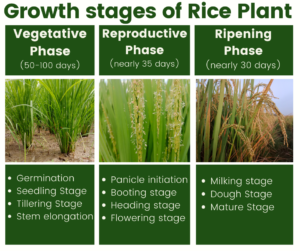
The vegetative stage of rice generally lasts between 50 and 100 days, depending on the variety grown, and is marked by active crop growth including germination, seedling establishment, tillering, and stem elongation.
This stage is crucial as it lays the foundation for final yield by promoting strong root development, vigorous tiller formation, and rapid canopy expansion, which together enhance the plant’s photosynthetic capacity.
Proper and timely management during this phase—especially adequate supply of nitrogen along with balanced phosphorus and potassium, combined with optimal water management—is essential to support healthy plant architecture and maximize the number of productive tillers.
Any nutrient deficiency or moisture stress during the vegetative stage can significantly reduce crop vigor, limit tiller formation, and ultimately lower yield potential.
a) Germination Stage (0–7 Days)
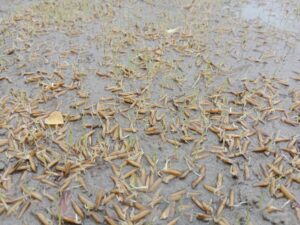
During the germination stage, rice seeds absorb water and begin sprouting, leading to the emergence of the radicle (root) and plumule (shoot), making this phase highly sensitive to moisture stress and seed-borne diseases.
No fertilizer application is required at this stage; however, seed treatment is essential to ensure healthy emergence, using fungicides such as Carbendazim or Thiram at 2–3 g per kg of seed, or bio-agents like Trichoderma for eco-friendly disease protection.
Irrigation should be light and timely to keep the soil moist without creating standing water, as excess moisture can promote seed rot and damping-off. Proper nursery drainage and avoidance of water stagnation are crucial to ensure uniform germination and strong early seedling establishment.
b) Seedling Stage (8–20 Days)
During the seedling stage, rice plants begin active leaf development while the root system expands and strengthens, preparing the seedlings for successful transplanting and early establishment in the main field.
In the nursery, light application of phosphorus-rich fertilizers such as DAP or SSP supports early root growth, while in the main field a balanced basal dose should be applied before transplanting, supplying about 25–30% of nitrogen, the full requirement of phosphorus, and around 50% of potassium using sources like urea, DAP or SSP, and MOP.
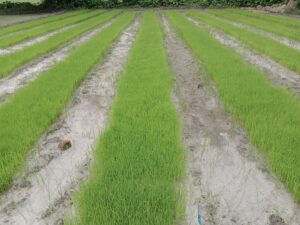
After transplanting, irrigation should be maintained at a shallow depth of 2–3 cm to support root establishment and reduce transplanting shock, while deep flooding should be avoided. During this stage, seedlings are vulnerable to pests such as leaf folder and thrips, which can be effectively managed through eco-friendly neem oil spray at 3 ml per liter of water, reserving chemical options like chlorpyriphos only for severe infestations to ensure healthy early crop growth.
c) Tillering Stage (20–45 Days)
The tillering stage is a yield-determining phase in rice during which the plant produces multiple tillers and develops maximum leaf area, directly influencing the number of productive panicles.
This stage has the highest demand for nitrogen, making it critical to apply about 40–50% of the total nitrogen requirement as a top dressing, commonly through urea, to promote vigorous tiller formation and healthy vegetative growth.
If zinc deficiency symptoms such as stunted growth or bronzing appear, zinc sulphate (ZnSO₄) should be applied at 25 kg per hectare to support enzyme activity and plant metabolism, while excessive nitrogen should be avoided as it can lead to lodging and increased pest incidence.
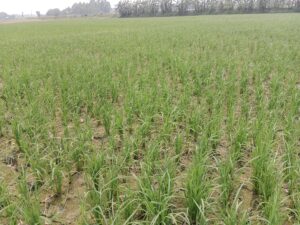
Proper water and pest management are equally important during this stage to sustain active growth. Maintaining a shallow standing water level of 3–5 cm ensures adequate moisture, while adopting alternate wetting and drying (AWD) improves root development and nutrient uptake.
The crop is vulnerable to pests such as stem borer, leaf folder, and whorl maggot, which can be effectively managed using recommended insecticides like chlorantraniliprole or cartap hydrochloride based on infestation level.
Timely weed control through post-emergence herbicides such as bispyribac sodium helps reduce competition for nutrients, water, and light, ensuring healthy tiller development and uniform crop growth.
d) Stem Elongation Stage (45–65 Days)
During the stem elongation stage, rice plants undergo rapid internode elongation, leading to a noticeable increase in plant height as the crop transitions from vegetative growth toward reproductive development.
To support this rapid growth and strengthen plant structure, the remaining 20–25% of nitrogen should be applied along with the balance 50% of potassium, which plays a key role in improving stem strength, reducing lodging, and enhancing nutrient transport within the plant.
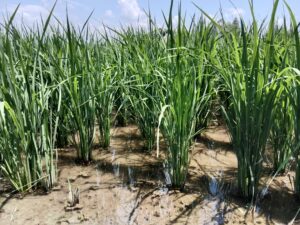
Consistent water and timely protection measures are essential at this stage to avoid yield losses. Shallow standing water should be maintained to ensure uninterrupted nutrient uptake, while any moisture stress must be avoided as it can reduce panicle size and affect grain number.
The crop is particularly vulnerable to brown plant hopper (BPH) and sheath blight during this phase; BPH can be effectively managed using insecticides such as pymetrozine or buprofezin, while diseases like sheath blight should be controlled through fungicides such as validamycin or hexaconazole to maintain healthy plant growth.
REPRODUCTIVE STAGE
The reproductive stage of rice typically lasts about 35 days and is the most yield-defining phase of the crop’s growth cycle. During this period, the plant transitions from vegetative growth to panicle initiation, panicle development, flowering, and fertilization, processes that ultimately determine the number of grains per panicle and the effectiveness of grain setting.
This stage is highly sensitive to environmental and management-related stress, including nutrient deficiencies, moisture imbalance (both drought and waterlogging), and pest or disease pressure. Even brief episodes of stress during the reproductive phase can result in poor panicle development, spikelet sterility, and reduced grain weight, leading to substantial yield reductions.
Therefore, ensuring optimal water management, balanced nutrition, particularly adequate nitrogen and potassium—and effective pest and disease control during this stage is critical for achieving high and stable rice yields.
a) Panicle Initiation Stage
During the panicle initiation stage, the rice plant begins forming the panicle within the stem, marking the onset of reproductive development and the peak of nutrient demand.
To support optimal panicle growth, the final split of nitrogen (10–15% of the total requirement) should be applied, along with foliar sprays of 2% DAP or 1% KNO₃ to enhance panicle size, while avoiding excessive nitrogen that can negatively affect grain formation.
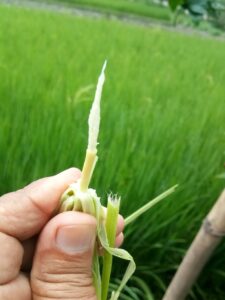
Continuous shallow flooding is essential to prevent moisture stress, as even short-term water deficits at this stage can reduce the number of grains per panicle. The crop is also vulnerable to stem borer, which can cause dead heart and white ear symptoms, and should be managed using recommended insecticides such as chlorantraniliprole or emamectin benzoate.
b) Booting Stage
During the booting stage, the rice panicle remains enclosed within the flag leaf sheath, making the crop highly sensitive to drought and nutrient deficiencies. To support proper panicle development, foliar sprays of boron (0.2%) and potassium nitrate (1%) are recommended to enhance nutrient availability and improve grain formation.
Consistent irrigation is critical at this stage to maintain saturated soil conditions and prevent moisture stress, which can severely impact yield. The crop is also susceptible to blast disease, which should be managed timely using fungicides such as tricyclazole or isoprothiolane to ensure healthy panicle development and successful flowering.
c) Heading & Flowering Stage
During the heading and flowering stage, the rice panicle emerges fully, and pollination and fertilization take place, determining the number of filled grains per panicle. No soil fertilizer application is required at this stage, though an optional foliar spray of 1% KCl can help improve grain set.
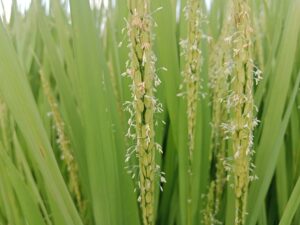
Irrigation management is critical and standing water of 3–5 cm should be maintained to avoid moisture stress, which can negatively affect fertilization. The crop is also vulnerable to pests such as gundhi bug and thrips, which can be managed using insecticides like lambda-cyhalothrin or imidacloprid, taking care to avoid spraying during peak flowering hours to protect pollinators and ensure successful grain development.
RIPENING STAGE
The ripening stage of the rice crop lasts for approximately 30 days and represents the final and decisive phase of crop development. During this period, the plant diverts assimilates and stored nutrients from the leaves and stems toward the developing grains, facilitating grain filling and physiological maturity.
Effective water and nutrient management during this stage is essential to ensure uniform grain development, optimal grain weight, and superior grain quality. Exposure to stresses such as moisture deficit, nutrient imbalance, or pest and disease infestation at this stage can disrupt translocation processes, resulting in poor grain filling, reduced test weight, and overall yield and quality losses.
a) Milking Stage
During the milking stage, rice grains are filled with a milky fluid as high levels of carbohydrates accumulate, which are essential for proper grain development and final yield.
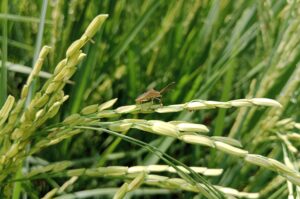
No nitrogen fertilizer is required at this stage, though an optional foliar spray of 1% potassium sulphate can help improve grain weight. Irrigation should ensure consistently moist soil, as any water stress can lead to shriveled grains and reduced quality.
The crop is also susceptible to diseases such as false smut and grain discoloration, which can be effectively managed with fungicides like propiconazole or tebuconazole to protect grain health and ensure optimal maturation.
b) Dough Stage
During the dough stage, rice grains harden as dry matter accumulation completes, marking the final phase of grain development before maturity. At this stage, irrigation should be gradually reduced, and any excess water should be drained to allow the grains to mature properly and prevent lodging or disease.
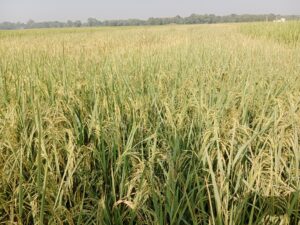
The crop may also be vulnerable to damage from birds and rodents, which can significantly affect yield if not controlled; practical measures such as bird scarers, nets, or traps should be employed to protect the developing grains and ensure a successful harvest.
c) Maturity Stage
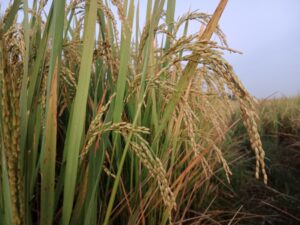
During the maturity stage, rice grains turn golden yellow as they reach physiological maturity, with moisture content dropping to approximately 20–22%, indicating readiness for harvest. Irrigation should be stopped 7–10 days before harvesting to allow the field to dry and prevent grain deterioration. Timely harvesting at this stage is essential to avoid grain shattering, maintain quality, and maximize yield, ensuring that the crop is collected at its peak nutritional and market value.
ALSO READ : Insect Pest of Rice Crop
FAQs
Q1. How long does it take for rice to grow?
The time required for rice to grow and reach maturity varies depending on the variety cultivated, as different rice types have different growth durations. Early-maturing varieties typically complete their life cycle in about 120 days, while medium-duration varieties usually take around 135 days. In contrast, long-duration rice varieties may require up to 155 days to fully mature. This variation allows farmers to select suitable rice varieties based on local climate, water availability, cropping systems, and market requirements.
Q2. How to make rice grow faster?
Follow the following steps to make rice grow faster:
A). Select early-maturing varieties & pre-soak seeds
Use certified early varieties and soak seeds for 12–24 hours to ensure quick and uniform germination.
B). Adopt Direct-Seeded Rice (DSR)
Sow pre-germinated seeds directly in a well-prepared field to avoid transplanting shock and save 15–20 days.
C). Manage water using AWD method
Practice alternate wetting and drying to strengthen roots and promote faster tillering instead of continuous flooding.
D). Apply balanced and timely fertilizers
Use basal NPK at sowing and apply nitrogen in splits within 20–25 days to boost early vegetative growth; add zinc if needed.
E). Use biofertilizers or biostimulants
Apply Azospirillum and PSB to improve nutrient availability and speed up early growth.
F). Control weeds early
Remove weeds within 20–25 days after sowing to reduce competition for nutrients and light.
G). Protect crop from early pests and diseases
Regularly monitor fields and take timely control measures to prevent growth delays.