Maize Fall Armyworm
The maize fall armyworm (Spodoptera frugiperda), a destructive pest belonging to the family Noctuidae, poses a significant threat to maize and other cereal crops across tropical and subtropical regions. Originally native to the Americas, it has rapidly spread to Africa, Asia, and Oceania due to its strong migratory ability, high reproductive potential, and adaptability to diverse environments.
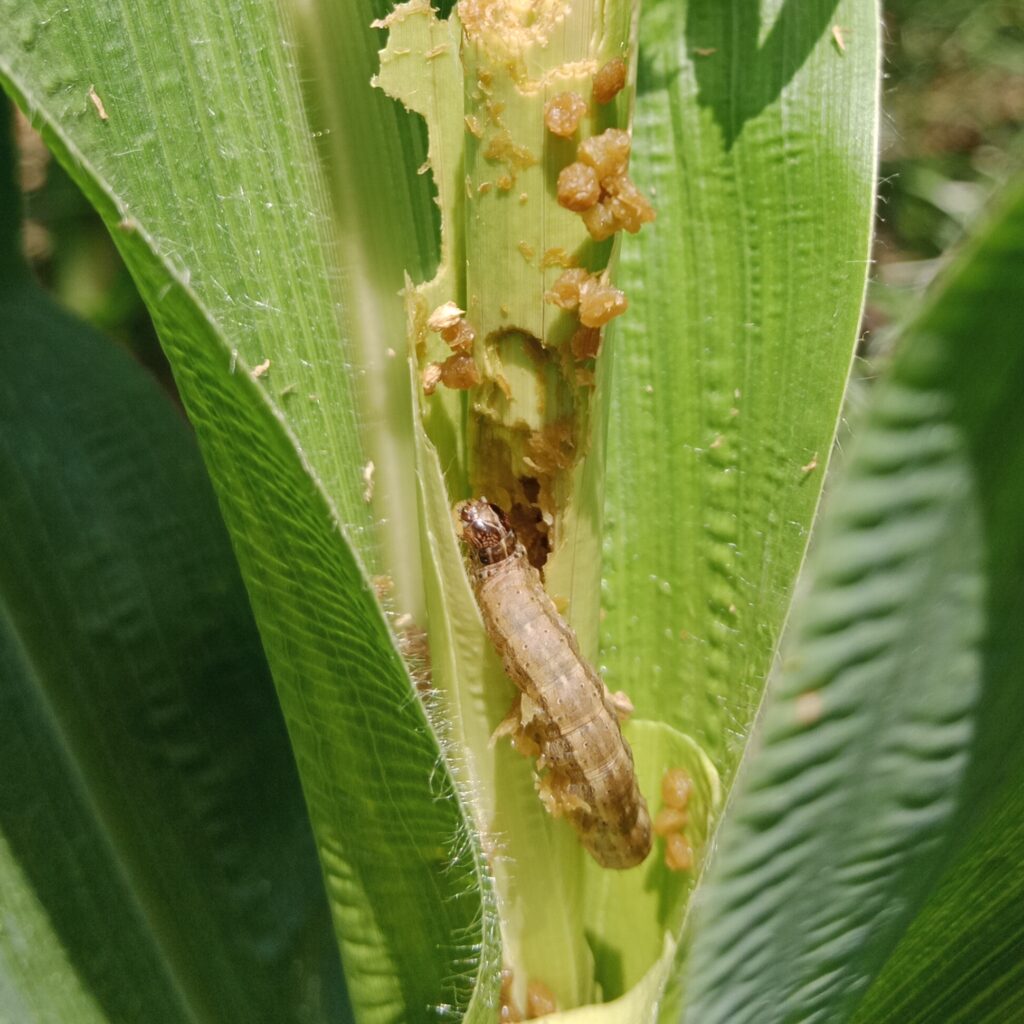
Highly polyphagous, it attacks over 80 plant species, with maize being the most severely affected, suffering damage at all growth stages from seedlings to maturity. Larvae cause the most destruction, feeding on leaves, whorls, and developing cobs, while adults facilitate rapid spread across fields.
Being its aggressive nature and capacity for reinfestation, maize fall armyworm management is best achieved through an Integrated Pest Management (IPM) approach, combining cultural practices, mechanical and biological control, and judicious use of insecticides applied at the appropriate stages to effectively reduce populations and prevent resistance.
Systematic Position
Kingdom: Animalia
Phylum: Arthropoda
Class: Insecta
Order: Lepidoptera
Family: Noctuidae
Genus: Spodoptera
Species: Spodoptera frugiperda
Distribution
Fall armyworm (Spodoptera frugiperda) is originally native to the tropical and subtropical regions of the Americas, but over the past decade it has shown an extraordinary ability to spread rapidly across continents. After its first detection outside the Americas in Africa, the pest quickly expanded into Asia and Oceania, posing a serious threat to food security.
In Asia, fall armyworm was first reported in India in 2018 and subsequently spread to neighboring countries including Nepal, Bangladesh, Sri Lanka, and several Southeast Asian nations. Due to its strong migratory behavior, high reproductive capacity, and adaptability to different environments, it has now become a major and persistent pest of maize across tropical and subtropical regions, particularly in areas characterized by warm temperatures and high humidity, which favor its survival and rapid population buildup.
Host Plants
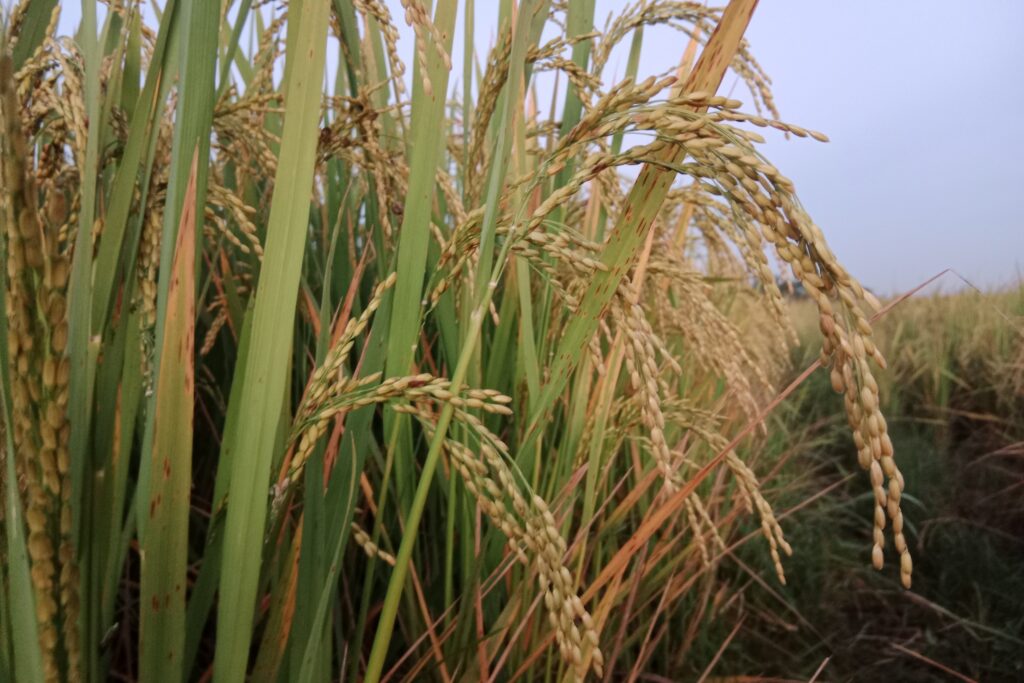
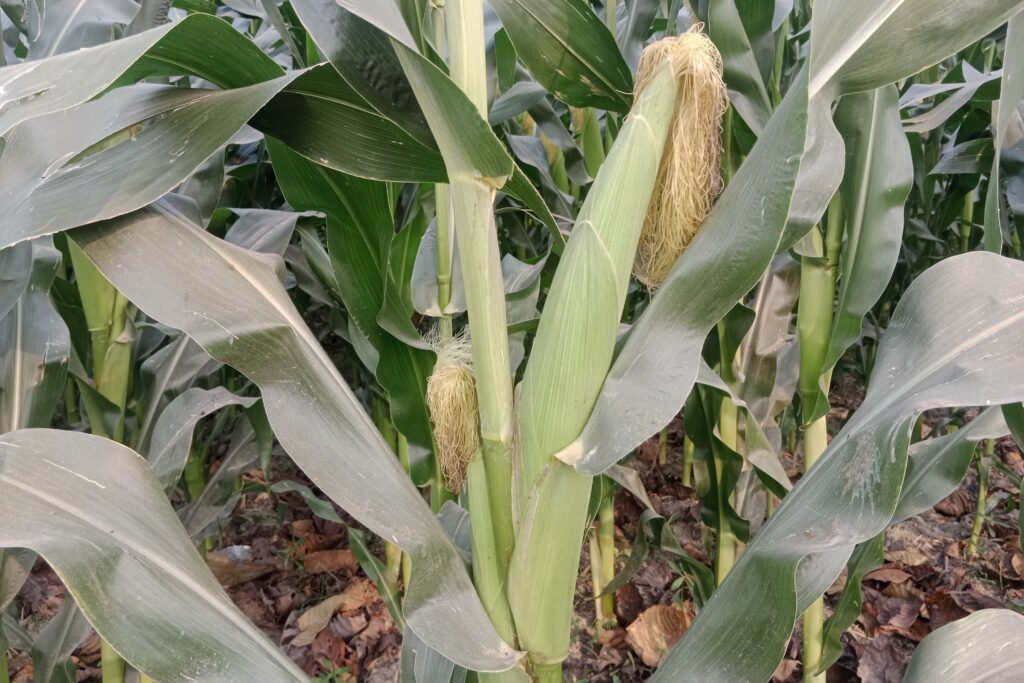
Fall armyworm (Spodoptera frugiperda) is a highly polyphagous insect pest with the ability to feed on more than 80 different plant species, making it particularly destructive and difficult to manage. Although it can attack a wide range of crops, maize is its most preferred and severely affected host, suffering damage at all growth stages from seedling to maturity.
Other important cereal and cash crops attacked by fall armyworm include rice, sorghum, sugarcane, wheat, and various millets, which contribute significantly to food and livelihood security. In addition, the pest also feeds on cotton and several vegetable crops such as tomato, cabbage, and okra, further expanding its economic impact.
Besides cultivated crops, fall armyworm can survive on grasses and weeds, which act as alternative hosts and help the pest persist and spread even in the absence of major crops, leading to continuous infestation pressure in agricultural ecosystems.
Pest Identification
Fall armyworm can be identified at different stages based on distinct physical features. The eggs are laid in clusters of about 100–200 on the underside of leaves and are usually covered with greyish, scale-like material. The larval stage, which is the most destructive, ranges in color from greenish to dark brown and has prominent longitudinal stripes along the body. A key diagnostic feature of the larva is the clearly visible inverted “Y” marking on the head, which helps distinguish it from other caterpillar pests.
After the larval stage, the insect enters the pupal stage, which is reddish-brown in color and typically found in the soil. The adult stage is a greyish-brown moth with a wingspan of about 32–40 mm, and its forewings show distinct and characteristic markings. While the adult moth is responsible for dispersal and egg laying, it is the larval stage that causes the maximum damage to crop by feeding aggressively on leaves, whorls, and developing plant parts.
Symptoms of Damage
Damage caused by fall armyworm differs according to the crop’s growth stage and is most noticeable in young maize plants. Initial infestation is commonly observed as window-pane feeding, where larvae scrape the leaf surface, leaving thin, translucent patches. As the leaves expand, these injuries appear as evenly spaced shot holes arranged in straight lines.

Severe infestation is characterized by intense feeding within the whorl, which is considered a major identifying feature. This damage is usually accompanied by large amounts of wet, sawdust-like excreta (frass) that accumulate inside the whorl and around leaf axils. At later stages of crop growth, extensive feeding may result in complete skeletonization of leaves, leaving only the midrib intact.
Larvae may also damage tassels and immature cobs, directly reducing grain yield. Under unmanaged and heavy infestations, yield losses can be extremely severe, sometimes reaching total crop failure. During early crop stages, fall armyworm injury is often mistaken for stem borer damage, making careful field monitoring essential for correct identification and timely control.
Life Cycle and Seasonal Occurrence
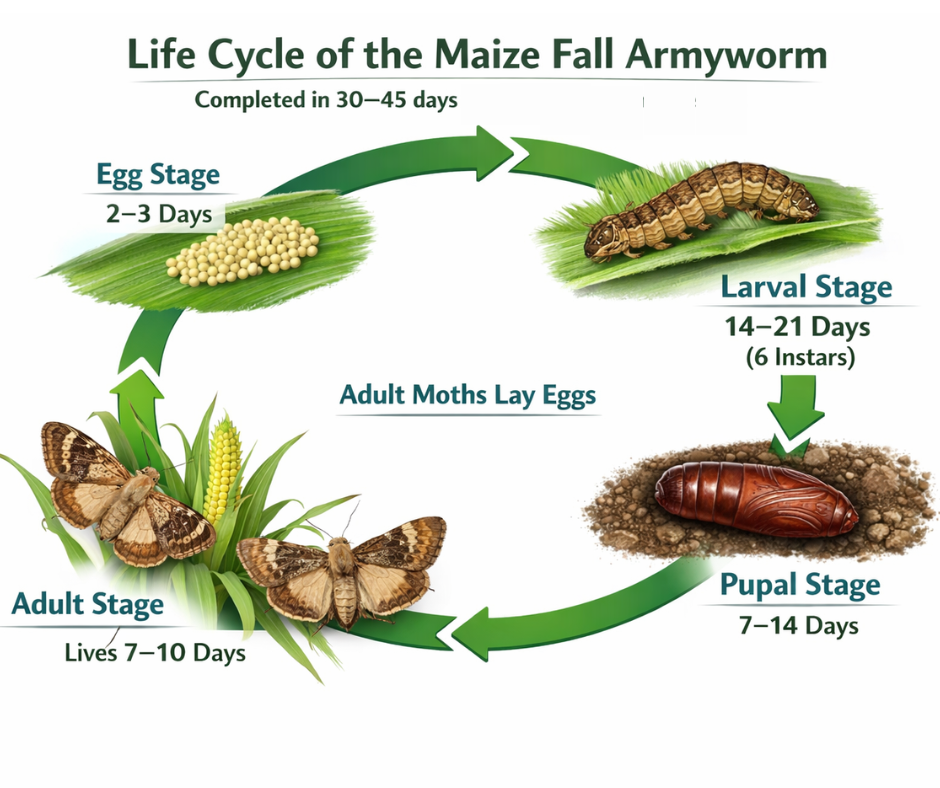
The life cycle of fall armyworm generally spans 30–45 days, depending on environmental temperature. In tropical and subtropical regions, the pest remains active year-round, with population surges commonly occurring during monsoon and post-monsoon periods. Adult moths possess strong migratory ability, allowing them to disperse rapidly across long distances and colonize new areas.
Egg Stage
The life cycle begins with the egg stage, which lasts about 2–3 days. Eggs are laid in clusters on the lower surface of leaves and are covered with a grey, scale-like layer that offers protection. Due to this short developmental period, populations can increase quickly under favorable warm and humid conditions.
Larval Stage
After hatching, larvae enter the most destructive phase, lasting approximately 14–21 days and progressing through six instars. During this stage, larvae feed aggressively on leaves, whorls, and developing plant tissues, producing large quantities of frass. This stage accounts for the majority of crop damage and is the primary target for management practices.
Pupal Stage
Once larval development is complete, pupation occurs in the soil and lasts about 7–14 days. Pupae are reddish-brown and remain inactive, but this stage is vital for transformation into the adult moth.
Adult Stage
Adults emerge from the soil and live for about 7–10 days. They are greyish-brown moths with a wingspan of 32–40 mm and are capable of long-distance flight. Adults are responsible for reproduction and dispersal, initiating subsequent generations. In warmer regions, continuous breeding leads to rapid population buildup, especially during favorable seasons.
Maize Fall Armyworm Management
Integrated Pest Management (IPM) is the most effective and sustainable approach for controlling fall armyworm, combining cultural, mechanical, biological, and chemical methods.
Cultural Control
- Early sowing and uniform planting schedules
- Deep ploughing to expose pupae in the soil
- Regular removal and destruction of egg masses and larvae
- Intercropping maize with pulse crops such as cowpea or soybean
Mechanical Control
Mechanical methods include manual collection and destruction of young larvae during early infestation. Applying a mixture of sand with lime or ash into maize whorls restricts larval movement and reduces feeding activity.
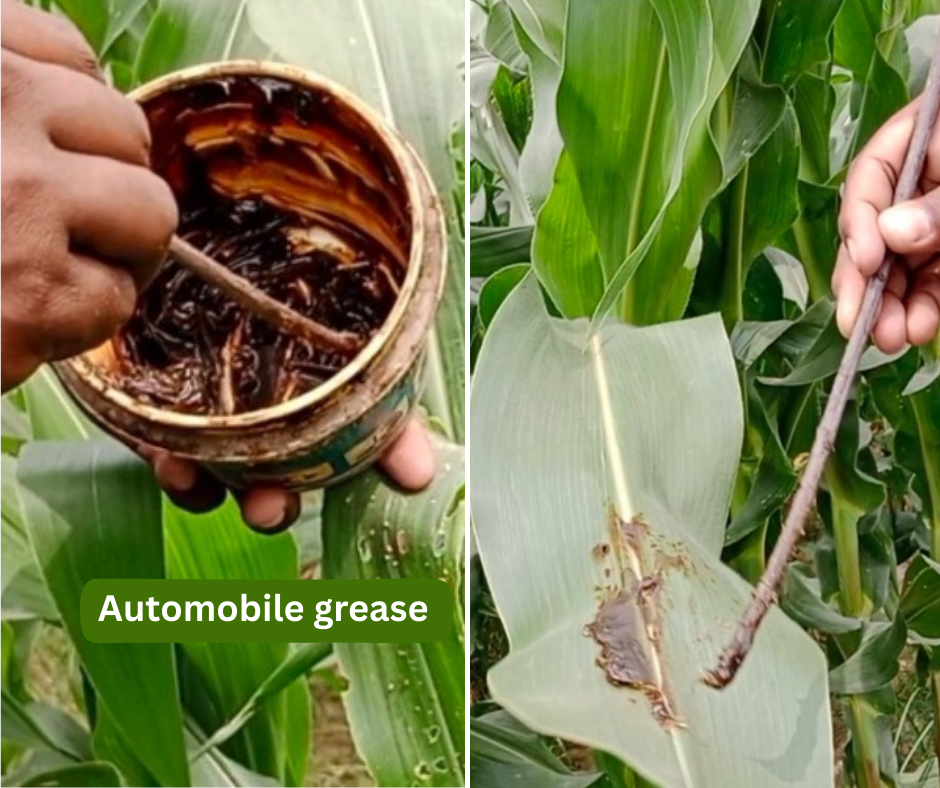
Application of automobile grease at a rate of 0.15 g per maize whorl or on the tip of a drooping leaf in every 10–15 plants has been reported to significantly lower infestation within 7 days. Complete suppression can be achieved within two weeks, as the grease irritates larvae and forces them to abandon treated plants.
Biological Control
Biological management relies on beneficial organisms and bio-pesticides. Egg parasitoids such as Trichogramma species can be released at approximately 50,000 adults per hectare at 7–10-day intervals to reduce egg survival. Neem Seed Kernel Extract (NSKE) at 5% (prepared by soaking 5 kg of crushed neem kernels in 100 liters of water) acts as an antifeedant and growth regulator. Bio-pesticides like Bacillus thuringiensis (1–2 g per liter) and Metarhizium anisopliae (5 g per liter) are effective against early larval stages and are environmentally safe.
Chemical Control
Chemical insecticides should be applied cautiously and mainly during early larval stages. Recommended options include Emamectin benzoate 5 SG (0.4 g/L), Spinetoram 11.7 SC (0.5 ml/L), and Chlorantraniliprole 18.5 SC (0.4 ml/L). Sprays should be directed into the maize whorl where larvae hide. To prevent resistance development and protect beneficial organisms, repeated use of the same insecticide should be avoided, and chemicals should always be integrated with other control measures.
ALSO READ: MAIZE FARMING PROFIT PER ACRE
FAQs
Q1. What is the most effective control method for fall armyworm?
One of the most effective and economical methods during early infestation is the application of automobile grease at 0.15 g per maize whorl or on the tip of a drooping leaf on every 10–15 plants. This practice significantly reduces infestation within a week and may achieve complete control within two weeks by irritating larvae and disrupting their feeding behavior.
Q2. When is the best time to spray against armyworms?
Spraying is most effective when larvae are young. Applications should be carried out early in the morning or late in the evening when larvae are actively feeding and environmental conditions favor better spray performance. The spray must be directed into the plant whorl and should be based on field scouting rather than routine scheduling.
Q3. Why do armyworm infestations reoccur frequently?
Recurring infestations are mainly due to the pest’s high reproductive rate, short life cycle, and strong migratory capacity. Adult moths can travel long distances with wind assistance, enabling rapid reinfestation. Continuous host availability, warm climates, hidden larval feeding habits, insecticide resistance, poor field hygiene, and lack of coordinated area-wide management further contribute to repeated outbreaks.
Sources
University of California Agriculture & Natural Resources (UC ANR)
European Plant Protection Organization (EPPO)
Food and Agriculture Organization (FAO)
Punjab Agricultural University (PAU)
Tamil Nadu Agriculture University (TNAU) – Agritech portal
Indian Council of Agricultural Research (ICAR)
Nepal Agricultural Research Council (NARC)
U.S. Department of Agriculture (USDA).