Agri. Academics

Eight Major Insect Orders: A Detailed Taxonomic Overview
Agri. Academics, All Posts, Entomology

8 Major Insect Orders: A Detailed Taxonomic Overview

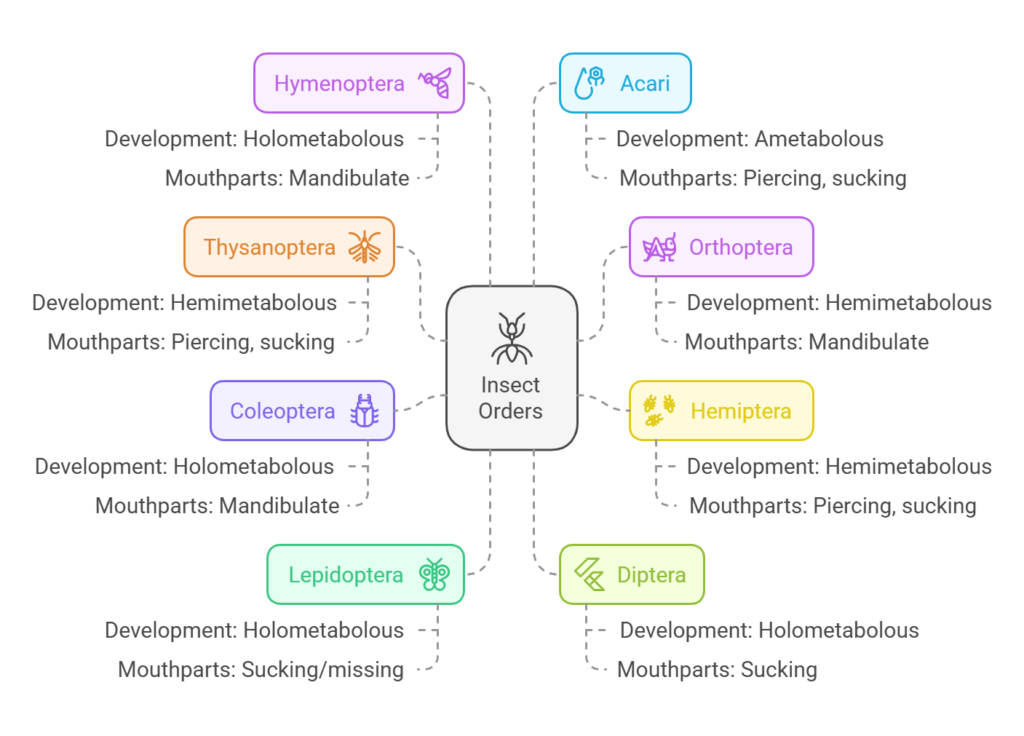
Eight Major Insect Orders Insects represent one of the most diverse and ecologically significant groups of organisms on Earth. This comprehensive overview explores the eight major insect orders, delving into their developmental modes, defining morphological traits, and crucial ecological roles. Additionally, the content extends its scope to include Acari, encompassing mites and ticks, to provide […]

8 Major Insect Orders: A Detailed Taxonomic Overview Read Post »
Piercing-Sucking Mouthparts: Structure, Mechanisms, and Adaptations
Agri. Academics, All Posts, Entomology

Piercing-Sucking Mouthparts: Structure, Mechanisms, and Adaptations

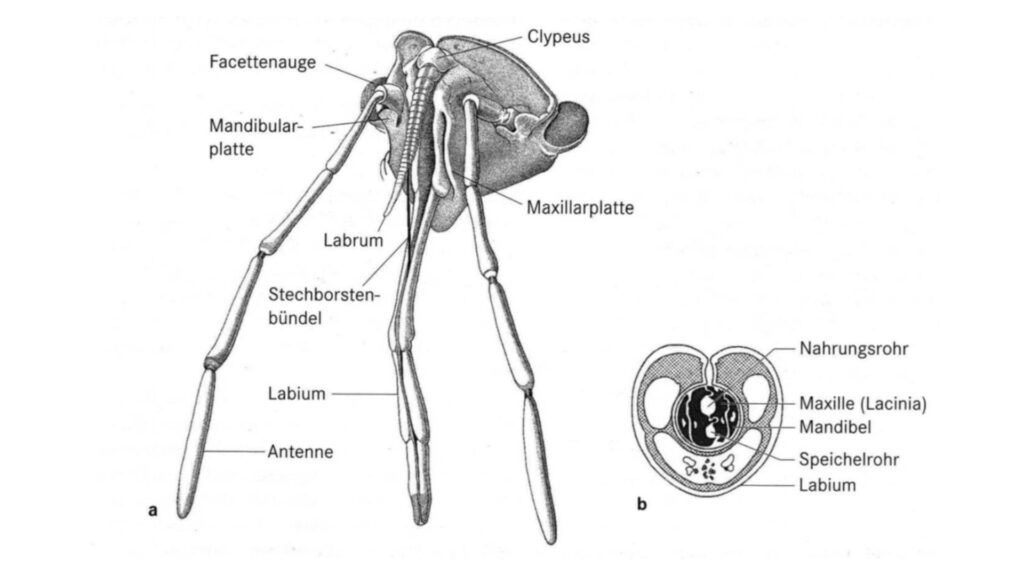
Piercing-Sucking Mouthparts  Insects exhibit a remarkable diversity of feeding mechanisms, tailored to their ecological roles and dietary preferences. Among these, piercing-sucking mouthparts represent a specialized adaptation that enables efficient extraction of liquid nutrients from plants or animals. Characterized by their unique structure, these mouthparts combine sharp, needle-like stylets for piercing tissues and channels for ingesting

Piercing-Sucking Mouthparts: Structure, Mechanisms, and Adaptations Read Post »

“Insect Anatomy: Segments, Limbs, and Adaptations”
Agri. Academics, All Posts, Entomology

Insect Anatomy: Segments, Limbs, and Adaptations

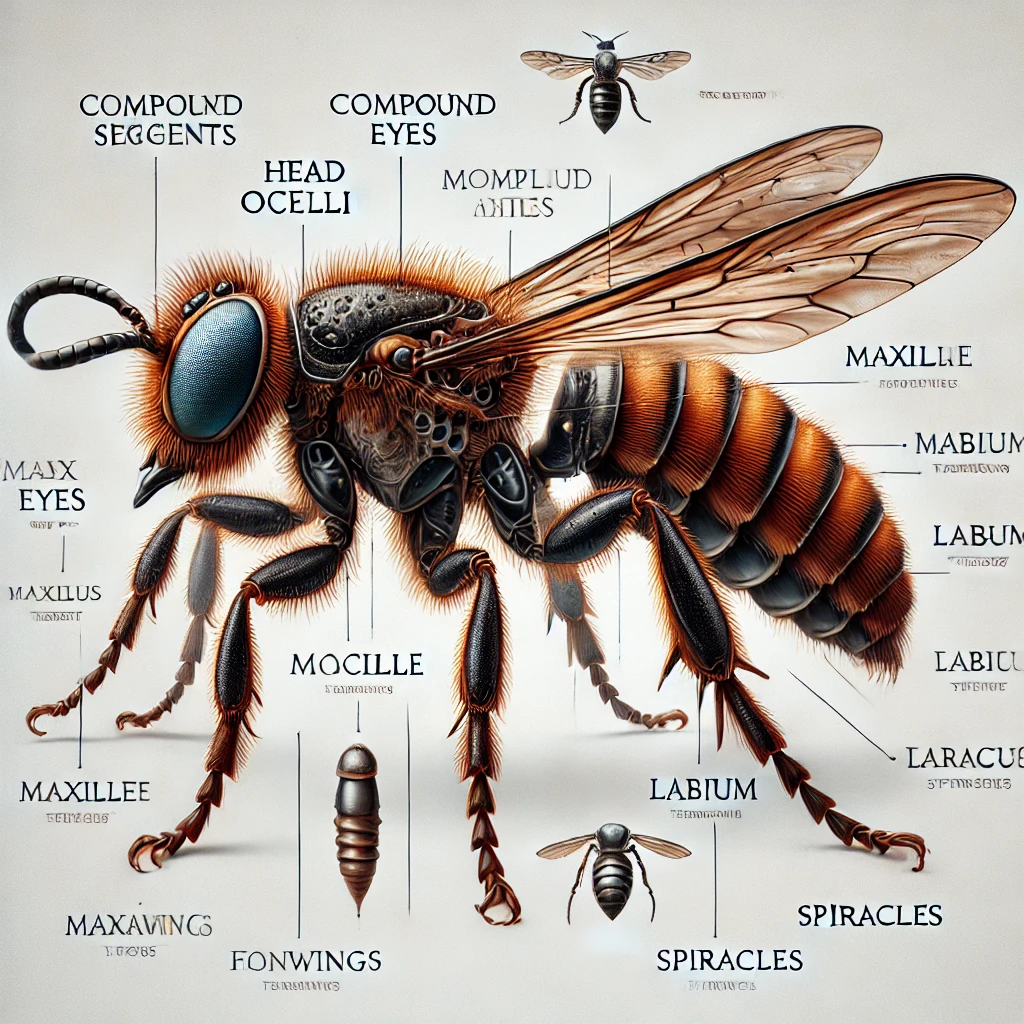
Insect Anatomy: Segments, Limbs, and Adaptations Insects, as one of the most diverse groups of organisms on Earth, owe much of their success to their highly specialized anatomy. Their bodies are intricately divided into three primary segments—head, thorax, and abdomen—each tailored to specific functions such as sensory perception, locomotion, and reproduction. Equipped with jointed limbs

Insect Anatomy: Segments, Limbs, and Adaptations Read Post »

A Hierarchical Classification of Arthropods (Phylum Arthropoda)
Agri. Academics, All Posts, Entomology

A Hierarchical Classification of Arthropods (Phylum Arthropoda)

Phylum Arthropoda Arthropods, a highly diverse group of invertebrates, are distinguished by their exoskeleton, segmented body structure, and jointed limbs. A hierarchial classification of arthropods offers an in-depth exploration of their subgroups and evolutionary characteristics. Arthropoda is the largest and most diverse phylum in the animal kingdom, encompassing a vast range of organisms that share

A Hierarchical Classification of Arthropods (Phylum Arthropoda) Read Post »

Use of Oligonucleotides in Molecular Biology
Agri. Academics, All Posts, Molecular Biology

Use of Oligonucleotides in Molecular Biology

Use of Oligonucleotides Oligonucleotides are short, single-stranded sequences of DNA or RNA, typically ranging from 10 to 50 nucleotides in length. Use of Oligonucleotides are widely done in various fields, including molecular biology, biotechnology, and medicine. They are synthetically produced and widely used in molecular biology, genetic research, and biotechnology. Due to their customizable sequences,

Use of Oligonucleotides in Molecular Biology Read Post »

Scroll to Top