
Tilapia Farming
Tilapia farming is a popular form of freshwater aquaculture that involves cultivating tilapia, a hardy and fast-growing fish, in ponds or tanks. Known for their adaptability, high growth rate, and market demand, Tilapia is ideal for semi-intensive and intensive farming systems. This farming practice provides a reliable source of income and nutrition, making it an important venture for small- and large-scale fish farmers.
Semi-intensive tilapia farming in Nepal offers significant financial returns, making it an attractive venture for aquaculture entrepreneurs. When analyzing Tilapia farming profit per acre, a typical 1-acre farm generates a total revenue of NPR 1,400,000 per production cycle, with operating costs amounting to NPR 584,500, resulting in a profit of NPR 815,500 per cycle.
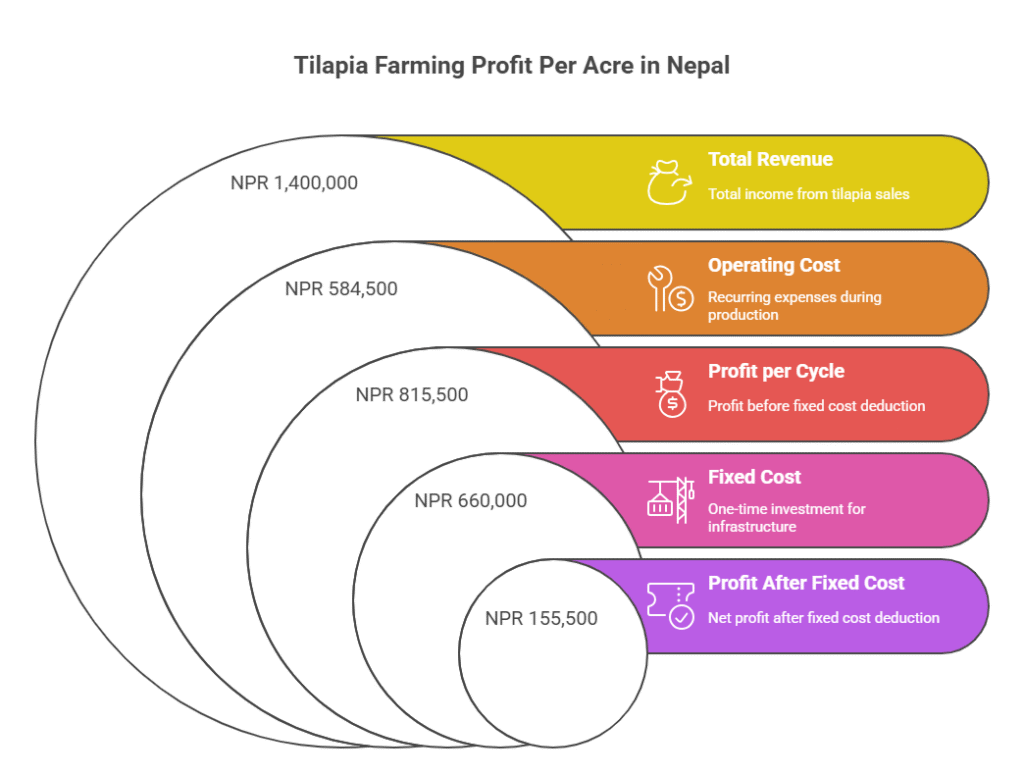
Considering the one-time fixed cost of NPR 660,000 for pond construction, equipment, and infrastructure, the net profit after deducting fixed costs in the first cycle is still a substantial NPR 155,500 per acre. With subsequent cycles, profits increase to NPR 815,500 per acre, as the fixed costs have already been recovered. Effective management of feed, fingerlings, and labor is essential to achieve these optimal returns.
Farm Size and Production System
A 1-acre pond (≈ 43,560 sq. ft. or 0.4 hectares) is widely regarded as a practical and manageable size for commercial tilapia farming. This farm size offers sufficient space for healthy fish growth while still allowing farmers to handle feeding, water monitoring, and routine management efficiently.
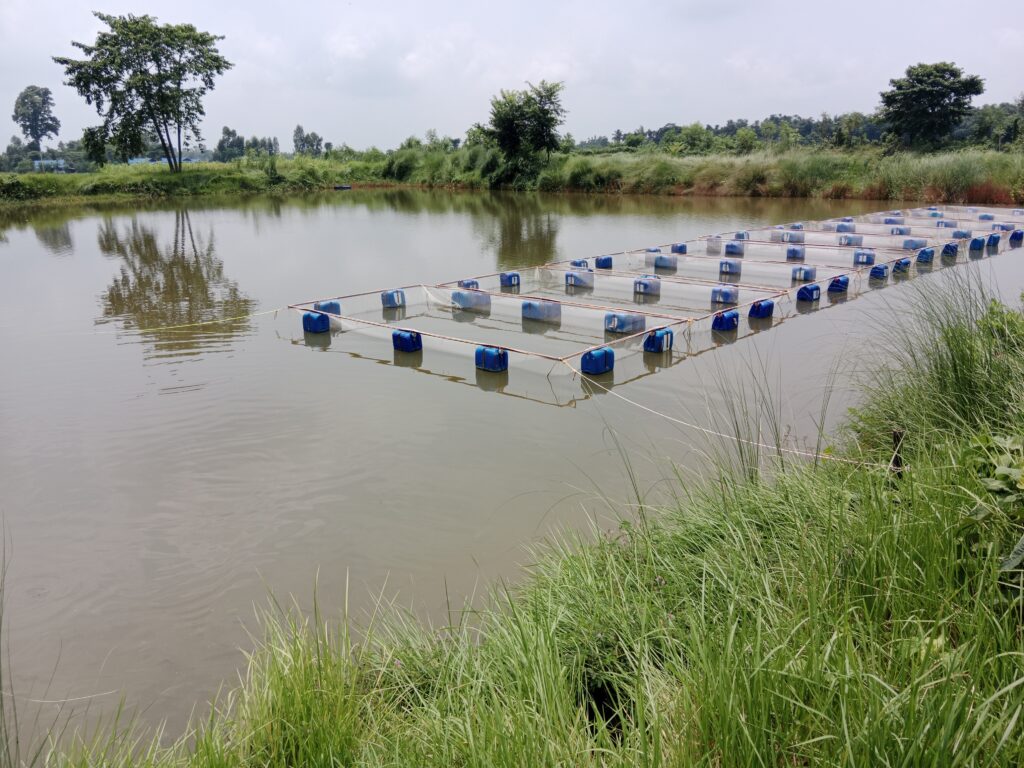
Tilapia can be raised using three primary production methods—extensive, semi-intensive, and intensive, each differing in input needs, management practices, and expected production levels. In Nepal, the semi-intensive system is the most widely recommended because it offers a good balance between investment and production.
Under this system, farmers typically stock 5,000–8,000 fingerlings per acre, provide supplemental pelleted feed, and maintain basic aeration and regular water management to support healthy fish growth. With proper care, semi-intensive farming can produce 3,000–5,000 kg of tilapia per acre per cycle, usually within 6–8 months, making it a profitable and practical option for both new and experienced fish farmers.
Pond Construction
A standard 1-acre pond (around 4,000 m²) is ideal for tilapia farming, and its construction should follow specific technical considerations to ensure efficient water management and long-term durability.
The pond should have a depth of 1–1.5 meters, which provides adequate space for fish growth and helps maintain stable water temperature. Properly designed inlet and outlet structures are essential to allow smooth water entry, regulated flow, and easy drainage during harvesting or maintenance.
The pond’s bunds must be strong and well-compacted to prevent seepage or collapse, while a gentle slope of 1–2% ensures efficient drainage and minimizes water stagnation. Planting vetiver or other grasses along the dykes helps reduce soil erosion and strengthens the pond embankments. In Nepal, constructing such a pond typically costs between NPR 4–6 lakhs per acre, depending on soil characteristics, labor availability, and geographical location.
Pond Preparation
a) Liming
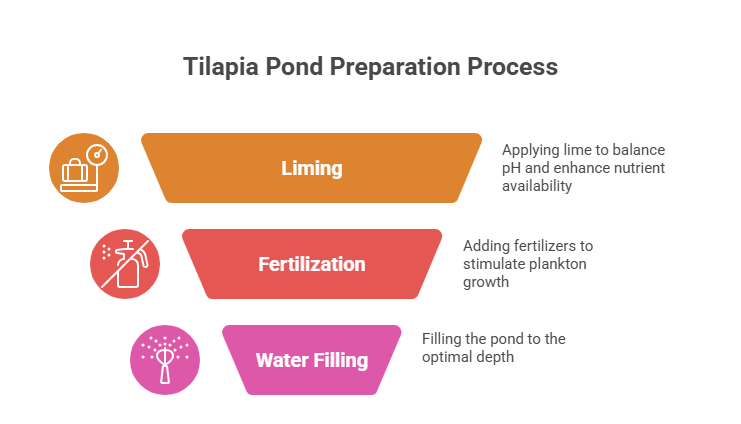
Liming is an essential step in pond preparation, aimed at creating a healthy and balanced environment for tilapia growth by maintaining the water’s pH within the ideal range of 7–8.5.
Applying lime helps neutralize soil acidity, which in turn enhances the availability of nutrients and supports the growth of beneficial plankton, the natural food source for fish.
Additionally, liming acts as a preventive measure against harmful pathogens by improving overall pond hygiene. The recommended application rate is 200–350 kg of agricultural lime (CaCO₃) per acre, with the exact amount depending on the existing acidity of the pond soil.
b) Fertilization
Fertilization is applied to stimulate the growth of natural plankton, which not only improves the water’s color but also enhances the availability of natural food for tilapia in the pond. This process typically involves adding organic fertilizers, such as cow dung at a rate of 2,000–2,500 kg per acre, to provide a steady nutrient supply for plankton development.
Additionally, inorganic fertilizers like urea (25–30 kg) and DAP (20–25 kg) are used at the start to trigger an initial plankton bloom, helping establish a productive and balanced aquatic environment for optimal fish growth.
c) Water Filling
Water filling involves filling the pond to a depth of 1–1.2 meters, which provides sufficient space for tilapia to grow and helps maintain stable water quality. After filling, the pond should be left undisturbed for 7–10 days to allow natural plankton to develop, creating a balanced and nutrient-rich environment that supports healthy fish growth once stocking begins.
Seed Selection
Seed selection is a critical factor in the success of tilapia farming, as the quality and uniformity of fry or fingerlings directly affect growth rates and overall production. Farmers are advised to use monosex (all-male) tilapia to prevent uncontrolled breeding in the pond, with a recommended fingerling size of 20–30 grams.
For semi-intensive systems, the ideal stocking density is 6,000–8,000 fish per acre, ensuring optimal growth and feed utilization. In Nepal, high-quality fingerlings can be sourced from certified hatcheries located in districts such as Bardiya, Chitwan, Rupandehi, Nawalparasi, and Saptari, which follow proper breeding and health management practices.
Feeding
Feeding is a key component of semi-intensive tilapia farming and directly influences growth and yield. In the early stages, floating pellets containing 25–30% protein are recommended to ensure proper nutrition and easy consumption.
Fish should be fed 3–5% of their body weight daily, with the feed amount reduced when water temperatures drop below 20°C to prevent overfeeding and water quality deterioration.
Feeding is typically done twice a day, in the morning and evening, to maintain consistent growth. For a 1-acre pond under semi-intensive management, the total feed requirement for one production cycle is approximately 4,000–5,000 kg.
Water Quality Management
Water quality management is crucial for achieving high survival rates and optimal growth in tilapia farming. The ideal pond conditions include a temperature of 24–32°C, pH between 7 and 8.5, dissolved oxygen above 5 mg/L, ammonia levels below 0.02 mg/L, and water transparency of 25–40 cm.
Effective management practices involve weekly monitoring of these parameters, performing partial water exchanges of 20–30% if ammonia accumulates, and using aeration during morning hours to maintain sufficient oxygen levels.
Additionally, keeping the water greenish in color through balanced plankton growth, rather than allowing it to become dark green, supports a healthy and productive pond environment for tilapia.
Tilapia Disease Management
Tilapia is relatively hardy, but diseases can occur due to poor water quality.
a). Columnaris
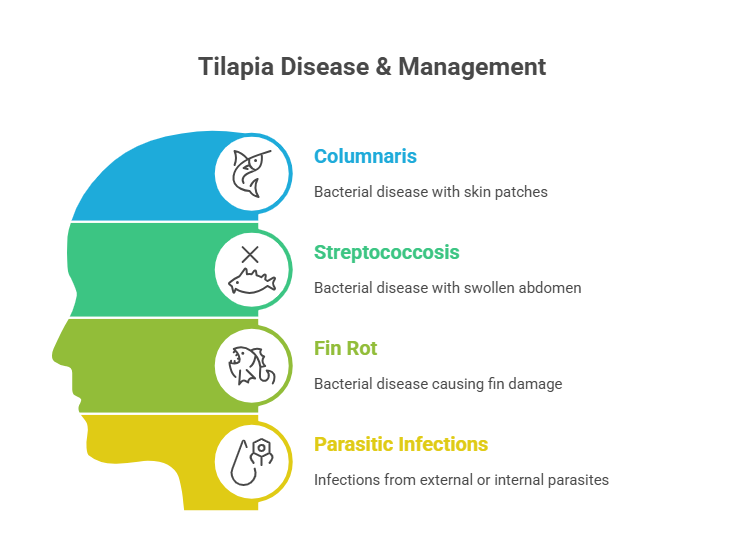
Columnaris is a common bacterial disease in tilapia, caused by Flavobacterium columnare, and often occurs under poor water quality or stressful conditions. Infected fish may show symptoms such as white or grayish patches on the skin, fins, or gills, frayed fins, lethargy, and reduced appetite.
Prevention involves maintaining clean water, proper stocking density, and good feeding practices. Treatment can be done using antibiotics such as oxytetracycline at 50–75 mg/kg of feed for 10–14 days, or by medicated baths with potassium permanganate at 2–3 ppm for 30–60 minutes, depending on severity. Early detection and prompt management are essential to minimize losses.
b). Streptococcosis
Streptococcosis is a bacterial disease in tilapia caused by Streptococcus species, commonly occurring in overcrowded ponds or under poor water quality. Infected fish may exhibit swollen abdomen, exophthalmia (pop-eye), lethargy, loss of appetite, erratic swimming, and skin hemorrhages. Prevention includes maintaining proper stocking density, good water quality, and stress reduction.
Treatment typically involves adding antibiotics such as oxytetracycline at 50–75 mg/kg of feed for 10–14 days or intraperitoneal injection of penicillin-streptomycin at 100 mg/kg body weight, under veterinary guidance. Prompt detection and treatment are crucial to reduce mortality and economic losses.
c). Fin rot
Fin rot is a common bacterial disease in tilapia, often caused by Aeromonas or Pseudomonas species, usually triggered by poor water quality, stress, or injuries. Infected fish show fraying, shortening, or discoloration of fins, lethargy, and reduced feeding. Prevention includes maintaining clean water, avoiding overcrowding, and minimizing physical injuries.
Treatment can be done using antibiotics such as oxytetracycline at 50–75 mg/kg of feed for 10–14 days, or by medicated baths with potassium permanganate at 2–3 ppm for 30–60 minutes, ensuring early intervention to prevent further spread and mortality.
d). Parasitic infections
Parasitic infections in tilapia are caused by external or internal parasites such as Trichodina, Gyrodactylus, and Dactylogyrus, which thrive under poor water quality or overcrowded conditions. Infected fish may display scratching against surfaces, flashing, skin lesions, excessive mucus production, lethargy, and reduced appetite.
Prevention involves maintaining clean water, optimal stocking density, and regular pond monitoring. Treatment can include formalin baths at 15–25 ppm for 30–60 minutes or potassium permanganate baths at 2–3 ppm, repeated as necessary, and praziquantel at 2–5 mg/L for external parasites. Early detection and timely treatment are essential to minimize stress, prevent secondary infections, and reduce mortality.
Harvesting
Harvesting tilapia is typically done when the fish reach a marketable size of 600–900 g, which usually occurs within 6–8 months under semi-intensive farming. Farmers can choose partial harvesting to maintain a steady cash flow while allowing remaining fish to grow further.
Complete harvesting using seine nets is employed when the entire stock is ready for sale, whereas drain harvesting involves emptying the pond to recover the maximum number of fish. Selecting the appropriate method depends on market demand, pond management, and the desired production schedule.
Capital Investment per acre for semi-intensive farming
The fixed cost includes all one-time investments required to set up a 1-acre semi-intensive tilapia farm, which provides the infrastructure for multiple production cycles.
| Particulars | Amount (NPR) |
| Pond construction | 5,00,000 |
| Water inlet/outlet structures | 40,000 |
| Aerator (optional) | 60,000 |
| Fencing | 35,000 |
| Tools, nets & equipment | 25,000 |
| Total Fixed Cost | 6,60,000 |
Operational cost for 1 acre within 6-8 months
Operating cost covers all consumables and recurring expenses during the 6–8 months production cycle, including feed, fingerlings, pond inputs, labor, and maintenance.
| Expense | Cost (NPR) |
| Fingerlings (7,000 pcs @ Rs 6) | 42,000 |
| Feed (4,500 kg @ Rs 85) | 3,82,500 |
| Lime, fertilizers, probiotics | 25,000 |
| Labor | 60,000 |
| Electricity & aeration | 35,000 |
| Pond maintenance | 20,000 |
| Miscellaneous | 20,000 |
| Total Operating Cost | 5,84,500 |
Total Income per Acre from Tilapia Farming
| Parameter | Value |
| Average production | 4,000 kg per acre |
| Selling price | NPR 350 per kg |
| Total revenue | NPR 14,00,000 |
Analysis of Tilapia Farming Profit Per Acre
| Parameter | Amount (NPR) |
| Total Revenue | 1,400,000 |
| Operating Cost | 584,500 |
| Profit per Cycle | 815,500 |
| Fixed Cost (one-time) | 660,000 |
| Profit After Deducting Fixed Cost (1st cycle) | 155,500 |
Semi-intensive tilapia farming is highly profitable in Nepal. Even after accounting for fixed costs, the first cycle yields a net profit of NPR 155,500 per acre, and subsequent cycles can generate NPR 815,500 per acre since the fixed cost has already been recovered. Proper management of feed, fingerlings, and labor is crucial for maximizing profit.
ALSO READ: Tilapia Farming-A Comprehensive Guide to Success
Sources
Augusty, K.T. 1979. Fish Farming in Nepal. Archana Printers & Publishers, Kottayam 29, India.
ICAR. 2006. Handbook of Fisheries and Aquaculture. Indian Council of Agricultural Research (ICAR), New Delhi.
Jha, D.K. 1991. Laboratory Manual of Fish Disease. Tribhuvan University, IAAS, Rampur.
Jhingran, V.G. and R.S.V. Pullin. 1985. A Hatchery Manual for the common, Chinease and Indian Major Carps. Asian Development Bank, ICLARM, Manila, Philippines.
NACA. 1989. Integrated Fish Farming in China Technical Manual 7. A World Food Day Publication of the Network of Aquaculture Centre in Asia and the Pacific, Bangkok Thailand.
Shrestha, M.K. and N.P. Pandit. 2012. A Text Book of Principles of Aquaculture (Second Edition). Aquaculture Department, Institute of Agriculture and Animal Science, Rampur, Chitwan, Nepal.
Shrestha T.K. and D.K. Jha. 1993. Introduction to Fish Culture. Institute of Agriculture and Animal Science, Rampur, Chitwan, Nepal.
Woynarovich, E. and L. Horvath. 1984. The Artificial Propagation of Warm Water Finfishes, A Manual for Extension.
Pingback: Freshwater Prawn Farming Profit per Acre -