Stevia Farming
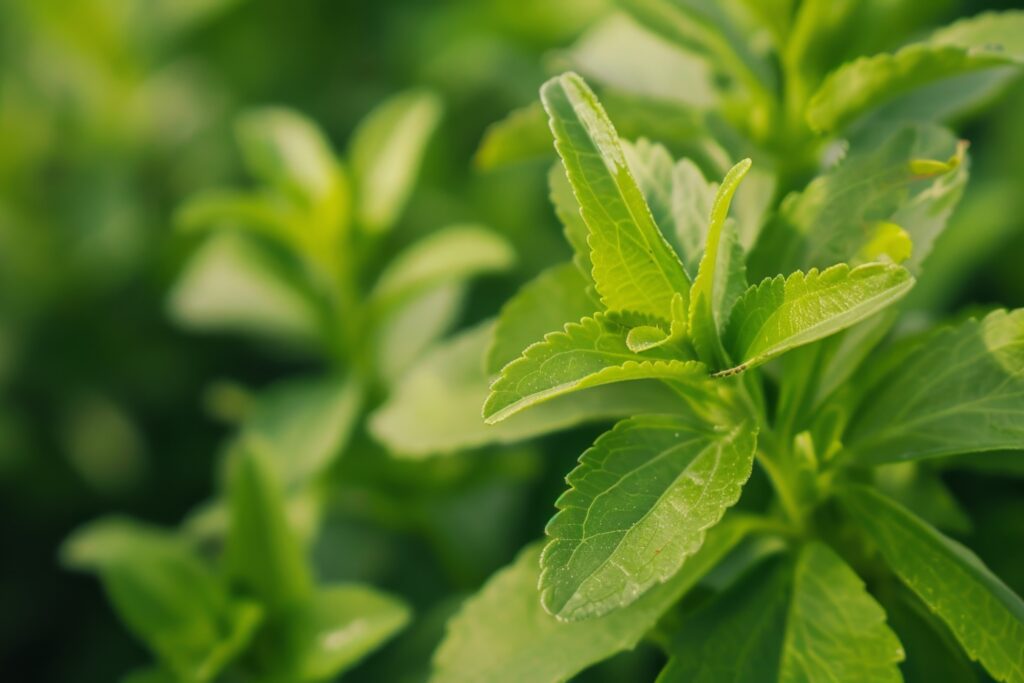
Stevia (Stevia rebaudiana Bertoni) is a perennial herb from South America, prized for its natural, zero-calorie sweeteners called steviol glycosides. Its leaves are much sweeter than sugar, making it a popular sugar substitute. Growing global demand has expanded commercial cultivation, offering farmers a profitable and sustainable crop for producing dried leaves or extracts for the food and beverage industry.
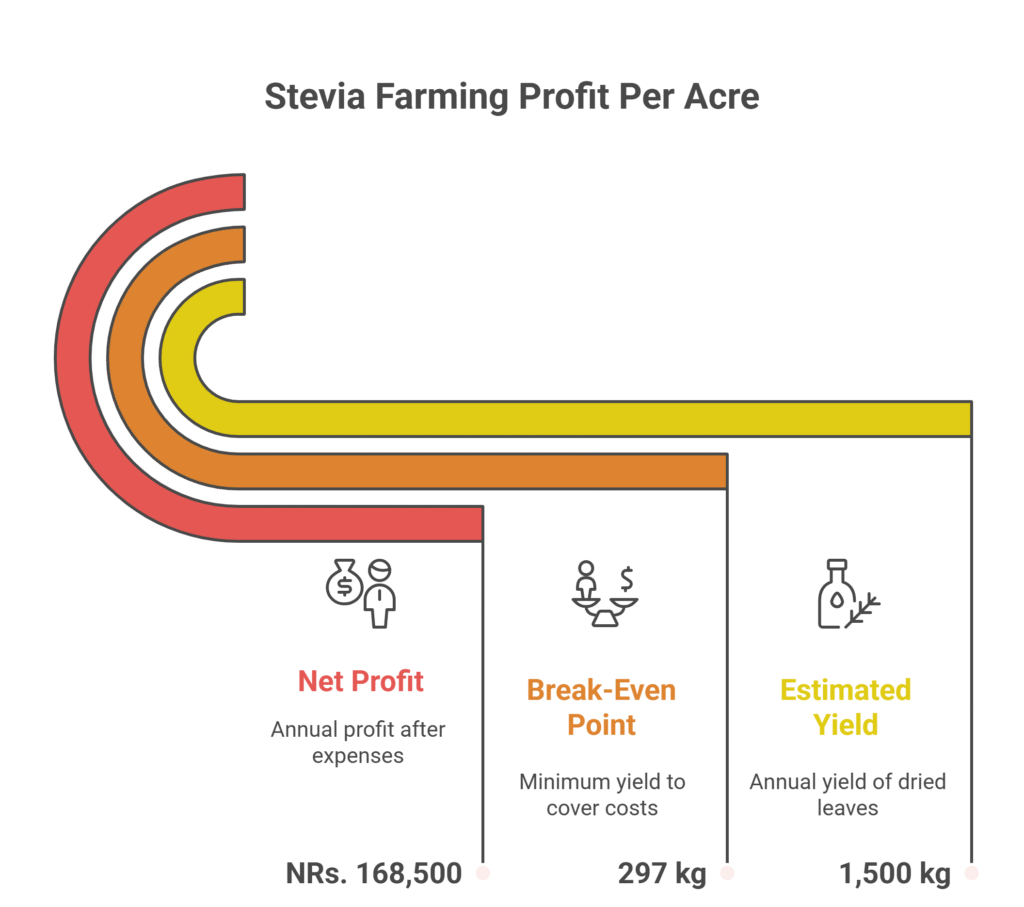
Stevia farming profit per acre can be highly rewarding, with farmers earning a net profit of approximately NRs. 168,500 per acre per year based on an estimated yield of 1,500 kg of dried leaves sold at NRs. 140 per kg. The major investments are primarily in land preparation and fertilizers/manure, while costs for nursery management, transplanting, and pest or disease control remain relatively low.
With proper management, stevia cultivation offers a sustainable and lucrative source of income. Break-even analysis indicates that producing just about 297 kg of dried leaves per acre is enough to cover all costs, and the return on investment (ROI) is around 406%, demonstrating that stevia farming can generate more than four times the initial investment annually.
Land Preparation
Land preparation begins with deep ploughing (20–30 cm) to break soil compaction, followed by 2–3 harrowings to achieve a fine tilth. Raised beds measuring 15–20 cm in height and 1–1.2 m in width should be prepared and properly leveled to ensure good drainage.
Soil sterilization—either through solarization or chemical fumigation—can be carried out in nursery areas to control soil-borne pathogens and weeds. During the final ploughing, well-decomposed FYM or compost should be incorporated as basal manure to enhance soil fertility.
Soil Type
The ideal soil for cultivation is well-drained, loamy to sandy loam soil rich in organic matter, with a pH range of 6.5–7.5, which is neutral to slightly acidic. Heavy clay, waterlogged areas, and saline or highly alkaline soils should be avoided. To maintain proper soil health, regular soil testing is recommended to ensure good aeration, balanced nutrients, and strong microbial activity.
Climatic Requirements
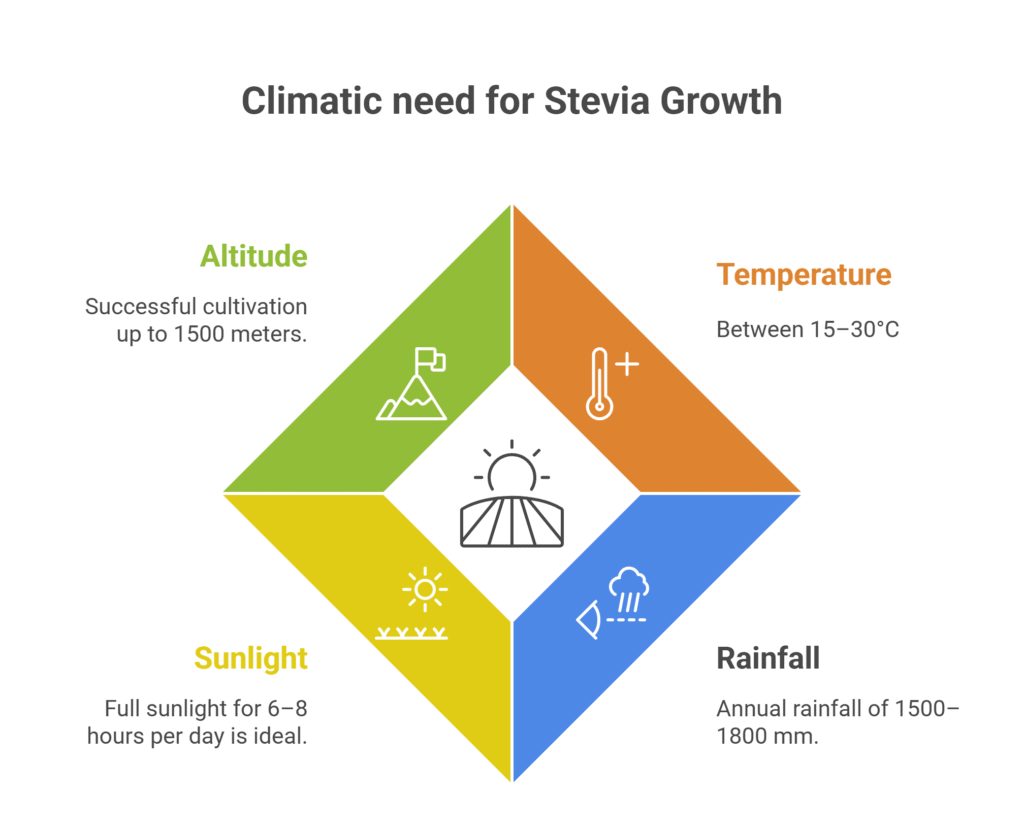
The crop grows best in subtropical to temperate climates with warm, humid conditions, thriving at temperatures between 15–30°C, though it can tolerate 0–40°C but is sensitive to frost. It requires well-distributed annual rainfall of 1500–1800 mm, supplemented with irrigation during dry periods. Full sunlight for 6–8 hours per day is ideal, with partial shade beneficial during extreme heat, and it can be cultivated successfully up to 1500 meters above sea level.
Major Cultivars
| Category | Cultivar Names / Criteria | Key Characteristics / Notes |
| Global Varieties | Criolla | Traditional variety; known for high glycoside content. |
| Morita II | High Rebaudioside A content; low bitterness profile. | |
| China varieties (e.g., SW107, SW129) | Various cultivars developed in China. | |
| India | MDS-13, MDS-14, MDS-16 | Varieties developed by CIMAP (Central Institute of Medicinal and Aromatic Plants). |
| SRB-123, SRB-512 | Other prominent Indian cultivars. | |
| Selection Criteria | Glycoside content (Stevioside, Rebaudioside A) | Primary factor for sweetness quality and commercial value. |
| Yield | Overall biomass and leaf production per acre. | |
| Disease resistance | Tolerance or resistance to common pests and diseases. | |
| Climate adaptability | Suitability to local growing conditions (temperature, rainfall, soil). |
Propagation
Seeds
Seed propagation is rarely used because of low germination rates and high genetic variability.
Vegetative Propagation
Stem cuttings of 10–15 cm with 4–5 nodes taken from healthy plants are commonly used and treating them with rooting hormone improves success. Tissue culture is the most preferred method for large-scale production as it ensures disease-free and uniform plantlets.
Root Division
Mature plants can also be propagated by dividing the root crown into healthy sections.
Seed Rate per Acre
| Propagation Method | Rate per Acre | Notes / Recommendation |
| Seeds | 200–300 grams | Not commercially recommended due to low germination and genetic variability. |
| Cuttings | 30,000–40,000 cuttings | Common vegetative propagation method. |
| Tissue Culture Plants | 30,000–35,000 plantlets | Preferred for large-scale, disease-free, and uniform planting. |
Nursery Management
Nursery management involves using a sterile growing medium made of soil, sand, and compost in a 1:1:1 ratio filled into trays or pots, where cuttings or nodes are inserted and kept moist. The nursery should be maintained under a 50% shade net with 70–80% humidity and temperatures between 20–25°C. Light watering and periodic fungicide drenches help prevent damping-off. Seedlings become ready for transplanting in 4–6 weeks when they reach 15–20 cm in height with 4–6 healthy leaves.
Planting
a). Planting Season
Planting should be done at the start of the monsoon season (June–July) or during spring (February–March) in tropical and subtropical regions, while in temperate areas it is best carried out after the last frost, typically between April and May.
b). Planting Direction
rows should be aligned in a North–South direction to ensure even sunlight distribution throughout the day.
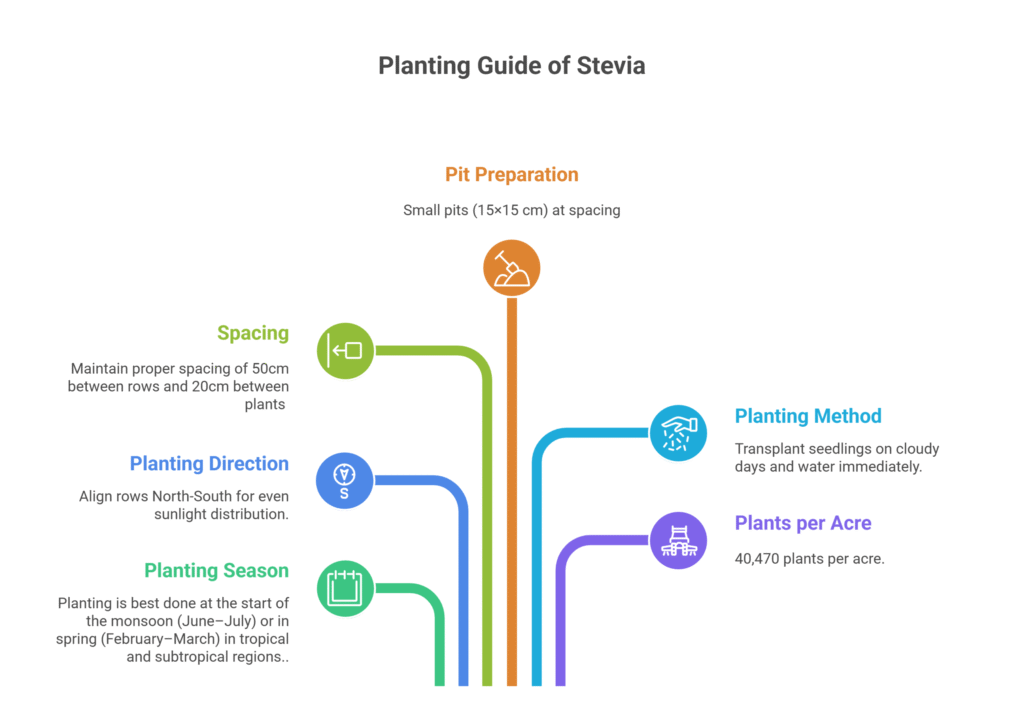
c). Spacing
Maintain a spacing of 45–50 cm between rows and 20–25 cm between individual plants.
d). Pit Preparation
Small pits (15×15 cm) at spacing; mix soil with compost.
e). Planting Method
Transplant seedlings/cuttings to field on cloudy days; water immediately.
f). Number of Plants per Acre
If stevia is planted at a spacing of 50 cm × 20 cm, an acre can accommodate approximately 40,470 plants.
Intercropping
Intercropping stevia with short-duration legumes like beans and peas, as well as radish, garlic, or marigold as a trap crop, is highly suitable, while tall or competitive crops such as maize or sugarcane should be avoided. This practice helps maximize land use, suppress weeds, and enhance soil nitrogen levels.
Irrigation
Stevia requires light, frequent irrigation every 4–7 days during dry periods, while avoiding waterlogging. Drip irrigation is preferred for water efficiency and maintaining leaf health. Adequate watering is particularly critical during the first month after planting and during post-harvest regrowth, but it should be reduced before harvest to enhance glycoside concentration in the leaves.
Fertilizer and Manure
Conduct a soil test to determine and apply the accurate dose of fertilizers.
a). Organic
Apply 10–15 tonnes of FYM or compost per acre at planting, with additional applications of vermicompost as needed.
b). Biofertilizer
Apply biofertilizers by using 800 g each of Azospirillum, PSB, and potash-mobilizing bacteria per acre.
c). Inorganic
For inorganic fertilization of stevia, nitrogen should be applied at a rate of 50–60 kg per acre in split doses, with a portion applied at the time of planting (basal) and the remainder after the first cuttings to support continuous vegetative growth.
Phosphorus (P₂O₅) should be applied at 40–50 kg per acre as a basal dose to promote strong root development and overall plant vigor. Potassium (K₂O) is recommended at 40–50 kg per acre, also in split applications, to enhance leaf quality, stress tolerance, and glycoside accumulation.
Care must be taken to avoid excessive nitrogen application, as it can lead to lush vegetative growth at the expense of steviol glycoside content, thereby reducing the sweetness of the leaves. Properly balanced inorganic fertilization, based on soil test results, ensures optimal plant growth, high yield, and improved leaf quality.
d). Micronutrients
Apply foliar sprays of zinc (Zn) and boron (B) only if soil tests indicate a deficiency.
Weed Control
Weed control is most critical during the first 40 days after planting and can be managed through mechanical methods such as hand weeding and hoeing between rows. Mulching with organic materials like straw or using plastic mulch helps suppress weed growth, while pre-emergent herbicides, such as Pendimethalin, can be applied carefully, ensuring that the chemical does not come into direct contact with the leaves.
Interculture Operations
Interculture operations include pruning the stems 10–15 cm above the ground after each harvest to encourage healthy regrowth, as well as removing dead or diseased leaves and maintaining proper aeration around the plants to ensure optimal growth and plant health.
Pest and Disease Management
Common Pests
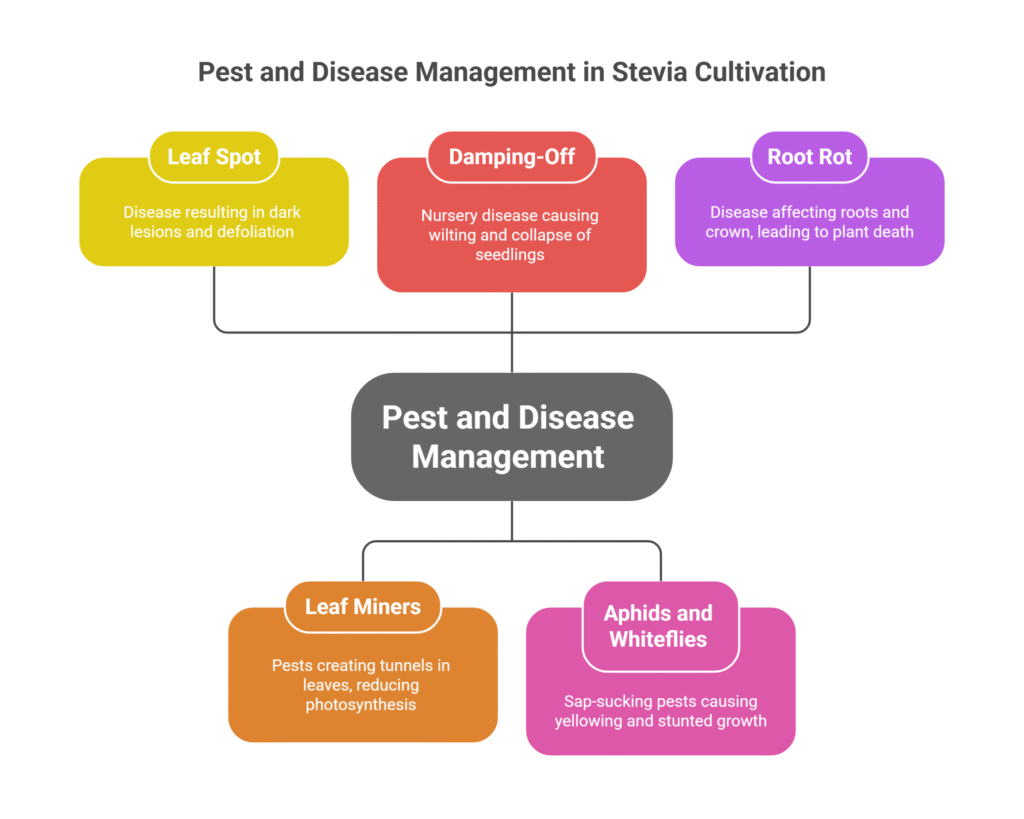
a). Aphids and Whiteflies
Aphids and whiteflies are common pests in stevia cultivation that suck sap from the leaves, causing yellowing, curling, and stunted growth. They can be managed using neem oil at 2–3 ml per liter of water or insecticidal soap at 2–3 ml per liter, applied as a foliar spray. For severe infestations, imidacloprid can be used at 0.3 ml per liter of water, ensuring careful application to avoid harming beneficial insects.
b). Leaf Miners
Leaf miners create tunnels inside the leaves, reducing photosynthetic efficiency and overall plant vigor. Management involves removing and destroying affected leaves to prevent further spread. Spinosad can be applied as a foliar spray at 0.2–0.3 g per liter of water, targeting active larvae for effective control.
Common Diseases
a). Damping-Off (Nursery)
Damping-off is a common nursery disease caused by soil-borne pathogens that attack young seedlings, leading to wilting and collapse. It can be managed by applying Trichoderma spp. as a soil treatment at 10–20 g per liter of water or using copper-based fungicides at 2–3 g per liter of water. Proper sanitation and avoiding excessive moisture in the nursery also help prevent the disease.
b). Leaf Spot
Leaf spot diseases caused by Alternaria and Septoria result in small, dark lesions on leaves, which can merge and cause significant defoliation. Preventive and curative measures include spraying Mancozeb at 2.5 g per liter of water or Carbendazim at 1 g per liter of water at 7–10 day intervals, especially during humid conditions. Removing and destroying infected leaves can further reduce disease pressure.
c). Root Rot
Root rot, caused by Sclerotium species, affects the roots and crown, leading to stunted growth and plant death. Management involves avoiding waterlogging and improving soil drainage. Infected areas can be treated with carbendazim soil drenching at 1 g per liter of water to suppress pathogen activity and protect healthy plants.
Harvesting
Stevia can be first harvested 3–4 months after planting, with subsequent harvests every 3–4 months, continuing for 3–5 years in perennial plants. Harvesting should be done in the morning, just before flowering, when glycoside content is highest. Stems are cut 10–15 cm above the ground using sickles or harvesters, and the leaves should be quickly shade-dried at temperatures below 40°C to preserve glycosides before being stripped from the stems.
Yield
| Parameter | Yield / Content Range | Notes / Details |
| Fresh Leaf Yield | 8–12 tonnes/acre/year | Achieved through multiple harvests (cuttings) per year. |
| Dry Leaf Yield | 1.5–2.5 tonnes/acre/year | Depends on cultivar, agronomic management, and growing conditions. |
| Glycoside Content | 8–15% in dry leaves | Varies significantly based on the cultivar (variety) and seasonal factors. |
Cost of Production of Stevia per Acre
| S.N. | Category | Cost of Investment (NRs.) |
| 1 | Land Preparation | 15,000 |
| 2 | Seed | 1,500 |
| 3 | Nursery Management | 2,000 |
| 4 | Transplanting | 1,000 |
| 5 | Fertilizers and Manure | 6,000 |
| 6 | Irrigation | 4,000 |
| 7 | Weed Control (pre & post-emergence) | 2,000 |
| 8 | Pest & Disease Control | 2,000 |
| 9 | Harvesting | 3,000 |
| 10 | Miscellaneous Costs | 5,000 |
| Total Cost | 41,500 |
Income per acre from Stevia farming
| Particulars | Estimated Yield (Kg/acre/year) | Market Price (NRs/kg) | Total Income (NRs.) |
| Dried Stevia Leaves | 1,500 | 140 | 210,000 |
Analysis of Stevia farming profit per acre
| Particulars | Amount (NRs.) |
| Total Income | 210,000 |
| Total Cost | 41,500 |
| Net Profit | 168,500 |
Stevia farming is highly profitable, offering a net profit of approximately NRs. 168,500 per acre per year based on an estimated yield of 1,500 kg of dried leaves at a market price of NRs. 140 per kg. The major investments are in land preparation and fertilizers/manure, while costs for nursery management, transplanting, and pest/disease control are relatively low.
With proper management, stevia cultivation provides sustainable income for farmers. The break-even analysis shows that with a total cost of NRs. 41,500 per acre, a farmer needs to produce only about 297 kg of dried leaves to recover all expenses. The return on investment (ROI) is approximately 406%, indicating that stevia farming can generate more than four times the initial investment per acre annually.
Also Read: Perilla Farming Profit per Acre
Also Read: Thyme Farming Profit per Acre
Sources
Food and Agriculture Organization (FAO)
University of California Agriculture & Natural Resources (UC ANR)
European Plant Protection Organization (EPPO)
Punjab Agricultural University (PAU)
Tamil Nadu Agriculture University (TNAU) – Agritech portal
Indian Council of Agricultural Research (ICAR)
Nepal Agricultural Research Council (NARC)
U.S. Department of Agriculture (USDA).
Ministry of Agriculture and Livestock Development (Nepal)
Disclaimer: This crop farming profits assume optimal conditions. Actual results may vary depending on climate, market prices, and farm management practices.
Pingback: Chamomile Farming Profit Per Acre -