Freshwater Prawn Farming
Freshwater prawn farming, particularly the culture of Macrobrachium rosenbergii (Giant River Prawn), has become one of the most profitable aquaculture ventures due to its high demand, premium market price, and suitability for tropical climates, making it increasingly popular among farmers in South Asia who aim to maximize fish farming profit per acre.
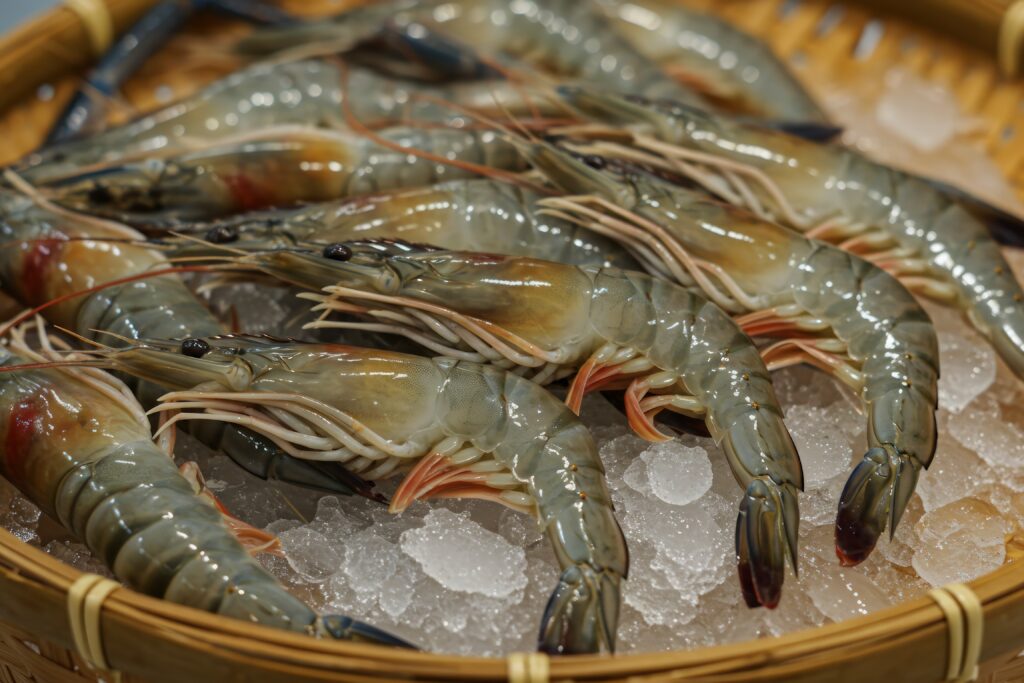
This farming system involves raising prawns in earthen ponds under extensive, semi-intensive, or intensive management, and the species thrives in warm water, grows rapidly, and reaches large marketable sizes suitable for both domestic and international markets.
With its fast growth rate, low disease risk, and strong consumer appeal, freshwater prawn farming offers significantly higher profitability than many traditional fish species when managed properly, and this guide provides a complete overview from pond preparation to harvesting and profit analysis.
Freshwater prawn farming profit per acre demonstrates significant economic potential, with a total capital investment of around NPR 380,000 and operating costs of approximately NPR 320,000 per cycle. Under optimal management, an average production of 1,000 kg per acre can generate total revenue of about NPR 1,000,000, resulting in a net profit of roughly NPR 680,000 per acre and a profit margin of 68%.
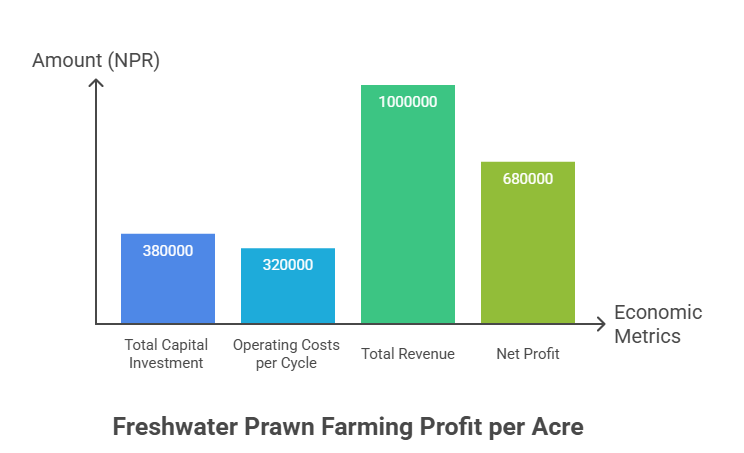
This highlights that, with proper pond preparation, high-quality seed selection, balanced feeding, and effective water quality management, freshwater prawn farming can be a highly lucrative and sustainable aquaculture venture.
Farm Size and Production System
Freshwater prawns can be cultured in ponds ranging from 0.25 to 1 acre, with a 1-acre pond under a semi-intensive system typically yielding 800–1,200 kg per cycle.
Farmers can choose from three main production systems: extensive, which uses low inputs, low stocking densities, and results in lower yields; semi-intensive, which is the most recommended due to its balanced feeding, proper water management, and strong profitability; and intensive, which involves high stocking density, continuous aeration, and skilled management for maximum production.
Among these, the semi-intensive system offers the best balance between investment, management effort, and overall output.
Pond Construction
A well-designed pond is essential for optimal prawn growth and easy harvesting, typically measuring 0.5–1 acre with a depth of 3–5 feet, equipped with proper inlet and outlet structures, strong embankments at least 3 feet above the water level, and a bottom sloped toward the outlet for efficient drainage.
Ensuring the pond is leak-proof helps maintain stable water levels and significantly reduces long-term maintenance costs, creating a suitable and efficient environment for freshwater prawn farming.
Pond Preparation
Liming
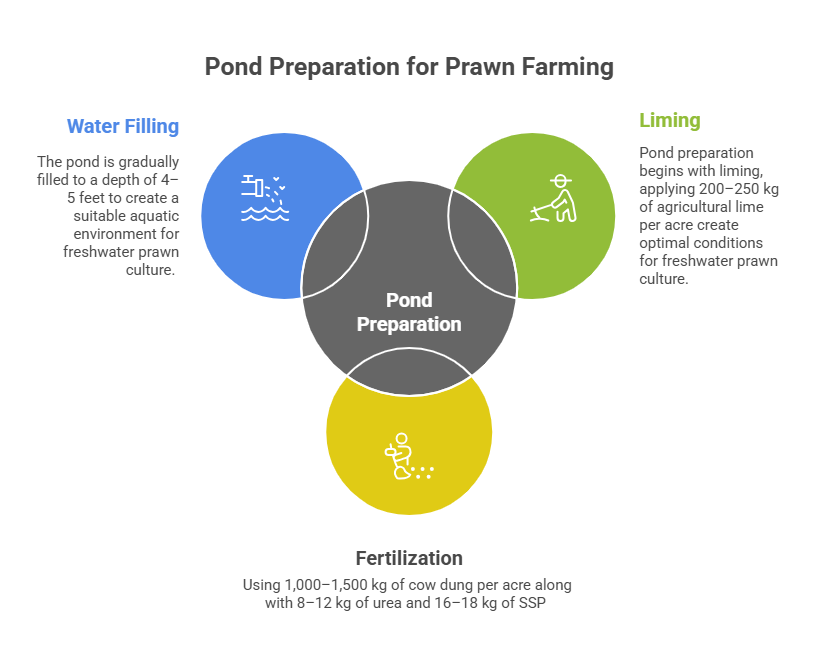
Pond preparation begins with liming, an essential step that involves applying 200–250 kg of agricultural lime per acre to create optimal conditions for freshwater prawn culture. This process helps balance the soil pH, which is crucial for maintaining a healthy aquatic environment, while also suppressing harmful pathogens that may be present in the pond bottom.
Additionally, liming improves overall water quality by enhancing nutrient availability and promoting the growth of beneficial microorganisms, ultimately creating a more stable and productive ecosystem for prawn growth and survival.
Fertilization
Fertilization is a crucial step in pond preparation, aimed at boosting plankton production, which serves as an essential natural food source for juvenile freshwater prawns.
This process involves applying organic and inorganic fertilizers in the right proportions, typically using 1,000–1,500 kg of cow dung per acre to enrich the pond with organic matter, along with 8–12 kg of urea and 16–18 kg of SSP to supply vital nitrogen and phosphorus needed for plankton growth.
The resulting plankton bloom not only enhances the nutritional environment for young prawns but also supports overall pond productivity, laying the foundation for healthy growth throughout the culture cycle.
Water Filling
Water filling is the final step of pond preparation, where the pond is gradually filled to a depth of 4–5 feet to create a suitable aquatic environment for freshwater prawn culture. After filling, the water is allowed to settle for 5–7 days, during which natural biological processes stabilize the water quality and support the initial development of plankton.
Before stocking the prawns, it is essential to thoroughly inspect the pond to ensure it is completely free of predators such as unwanted fish, insects, or amphibians, as these can harm juvenile prawns and reduce overall survival and productivity.
Seed Selection
Seed selection is one of the most critical factors for successful freshwater prawn farming, as healthy and high-quality seed ensures better growth, higher survival rates, and improved overall production. Farmers should always use PL-20 or larger post-larvae and maintain an optimal stocking density of 6,000–8,000 PL per acre to achieve balanced growth without overcrowding.
It is essential to choose seed that is uniform in size, active in movement, and completely free from visible deformities or diseases, preferably sourced from reliable and certified hatcheries to ensure genetic quality and disease resistance.
Before stocking, the post-larvae must be properly acclimatized to pond conditions by gradually adjusting them to the pond’s temperature and water parameters, which helps reduce stress and prevent early-stage mortality, ultimately ensuring a strong start to the farming cycle.
Feeding
Feeding is a vital aspect of freshwater prawn farming, as providing a balanced and nutrient-rich diet directly influences growth rate, survival, and overall production. Freshwater prawns require high-protein feed, ideally containing 28–32% protein, to support their rapid growth and molting cycles.
During the first 30 days, feed should be supplied at 5–8% of the total biomass to meet the nutritional needs of juveniles, then reduced to 3–4% of biomass between 31 and 90 days as prawns grow, and further lowered to 2–3% after 90 days when they approach market size.
Feeding should be done twice daily, preferably using feeding trays to monitor consumption and minimize feed wastage, which not only optimizes growth but also helps maintain water quality by preventing excess feed from decomposing in the pond.
Water Quality Management
Maintaining optimal water quality is essential for the health, growth, and survival of freshwater prawns. Key parameters to monitor include water temperature (26–32°C), dissolved oxygen (>5 mg/L), pH (7.0–8.5), ammonia (<0.1 mg/L), and water transparency (30–40 cm).
Keeping these factors within the ideal range creates a stable environment that supports plankton growth, proper feeding, and effective molting, all of which are critical for achieving high production and maximizing fish farming profit per acre.
To maintain good water quality, farmers should perform weekly water exchanges of 10–15%, provide regular aeration to prevent oxygen depletion, and remove sludge that accumulates at the pond bottom.
Additionally, dissolved oxygen and pH should be monitored every 3–5 days to detect and correct any imbalances early. Consistently maintaining these practices ensures higher survival rates, faster growth, and overall healthier prawns, ultimately leading to increased productivity and profitability.
Health & Disease Management
Although freshwater prawns are generally less susceptible to diseases compared to many fish species, they remain highly sensitive to poor water quality and suboptimal pond conditions. Maintaining clean water, proper aeration, balanced feeding, and regular monitoring is essential to prevent stress and the outbreak of infections.
Even minor neglect in water management or pond hygiene can lead to reduced growth, increased mortality, and lower overall productivity, making proactive health and disease management a key factor for successful prawn farming.
Shell diseases
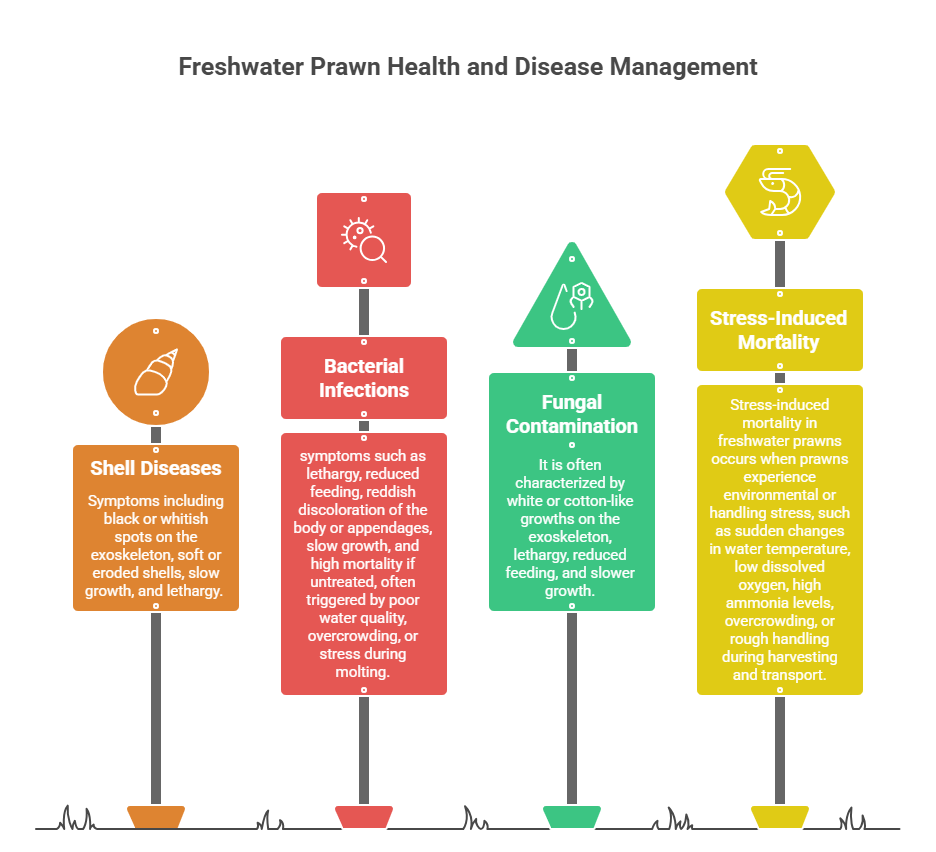
Shell diseases in freshwater prawns are common issues caused by bacterial or fungal infections, poor water quality, or physical injuries during molting, with symptoms including black or whitish spots on the exoskeleton, soft or eroded shells, slow growth, and lethargy. These diseases often arise from stress due to overcrowding, low dissolved oxygen, high ammonia levels, or inadequate minerals in the water.
Effective management includes maintaining water quality with dissolved oxygen above 5 mg/L, pH 7.0–8.5, and ammonia below 0.1 mg/L, along with weekly sludge removal and 10–15% water exchange. Probiotics can be applied at 5–10 g per cubic meter weekly to enhance beneficial microbes and suppress pathogens, while severe bacterial infections can be treated with oxytetracycline at 25 mg per kg of prawn biomass or furan-based antibiotics mixed with feed for 5–7 days.
Additionally, calcium carbonate supplementation at 50–100 mg/L strengthens shells and supports molting. Preventive measures, including proper pond management, balanced nutrition, and careful handling, are more effective than post-infection treatment.
Bacterial infections
Bacterial infections in freshwater prawns are common and can cause symptoms such as lethargy, reduced feeding, reddish discoloration of the body or appendages, slow growth, and high mortality if untreated, often triggered by poor water quality, overcrowding, or stress during molting.
Effective management begins with maintaining optimal pond conditions, including dissolved oxygen above 5 mg/L, pH 7.0–8.5, and ammonia below 0.1 mg/L, along with regular sludge removal and 10–15% weekly water exchange. For treatment, antibiotics such as oxytetracycline can be administered at 25 mg per kg of prawn biomass, or furanace (furan-based antibiotics) mixed with feed according to manufacturer’s instructions for 5–7 days, ensuring thorough consumption by all prawns.
Additionally, applying probiotics at 5–10 g per cubic meter of water weekly helps suppress pathogenic bacteria and restore microbial balance, while preventive measures like proper stocking density, careful handling, and balanced feeding further reduce the risk of bacterial outbreaks.
Fungal contamination
Fungal contamination in freshwater prawns typically occurs when pond conditions are poor, water quality is low, or prawns have injuries from molting, handling, or predator attacks, and it is often characterized by white or cotton-like growths on the exoskeleton, lethargy, reduced feeding, and slower growth.
Effective management involves maintaining clean water with dissolved oxygen above 5 mg/L, pH between 7.0 and 8.5, and ammonia levels below 0.1 mg/L, along with regular sludge removal and 10–15% weekly water exchange. For treatment, potassium permanganate (KMnO₄) can be applied at 2–3 mg/L as a bath for 30–60 minutes or methylene blue at 1–2 mg/L to control fungal growth, taking care to avoid overdosing, and repeated as necessary for 2–3 consecutive days.
Additionally, ensuring proper pond management, reducing stress, and using probiotics at 5–10 g per cubic meter weekly can help prevent fungal outbreaks and promote healthier prawn growth.
Stress-induced mortality
Stress-induced mortality in freshwater prawns occurs when prawns experience environmental or handling stress, such as sudden changes in water temperature, low dissolved oxygen, high ammonia levels, overcrowding, or rough handling during harvesting and transport. This stress can lead to weakened immunity, lethargy, reduced feeding, molting problems, and even sudden death, significantly affecting overall production.
Effective management involves maintaining optimal pond conditions with dissolved oxygen above 5 mg/L, pH between 7.0 and 8.5, ammonia below 0.1 mg/L, and regular water exchange of 10–15% weekly, along with proper aeration and sludge removal.
To mitigate stress-related mortality, farmers can administer probiotics at 5–10 g per cubic meter of water weekly to enhance gut health and immunity, and use vitamin-enriched feed or feed supplements containing ascorbic acid (Vitamin C) at 50–100 mg/kg of feed to strengthen prawn resilience.
Careful handling during stocking, harvesting, and transportation, combined with maintaining stable water quality, is essential to minimize stress and improve survival rates.
Harvesting
Freshwater prawns typically reach market size within 5–6 months, making timely harvesting crucial for maximizing yield and profit. Harvesting can be carried out in two main ways: partial harvesting using traps, which allows for selective collection of larger prawns while leaving smaller individuals to grow further, and final harvesting by completely draining the pond to collect all remaining prawns.
Under a semi-intensive farming system, a well-managed 1-acre pond can produce an average yield of 800–1,200 kg per cycle, depending on stocking density, water quality, and feeding practices, ensuring a profitable outcome for farmers.
Capital Investment Per Acre
| Expense | Cost (NPR) |
| Pond construction | 250,000 |
| Inlet–outlet setup | 40,000 |
| Aerator & accessories | 60,000 |
| Miscellaneous | 30,000 |
| Total Capital Cost | 380,000 |
Operating Cost Per Cycle
| Item | Cost (NPR) |
| Seed (PL) | 30,000 |
| Feed | 180,000 |
| Fertilizers & lime | 15,000 |
| Labor | 40,000 |
| Electricity & aeration | 30,000 |
| Medicines & probiotics | 20,000 |
| Miscellaneous | 15,000 |
| Total Operating Cost | 330,000 |
Total Revenue from Freshwater Prawn Farming per Acre
| Parameter | Details |
| Average Production | 1,000 kg/acre |
| Average Market Price | NPR 900–1,200 per kg |
| Total Revenue | NPR 10,00,000 (average) |
Analysis of Freshwater Prawn Farming Profit Per Acre
| Parameter | Amount (NPR) |
| Total Capital Cost | 380,000 |
| Operating Cost | 320,000 |
| Total Revenue | 1,000,000 |
| Net Profit | ≈ 680,000 |
| Profit Margin | 68% |
An analysis of freshwater prawn farming profit per acre reveals its strong economic potential, with a total capital cost of approximately NPR 380,000 and operating costs around NPR 320,000 per cycle.
With an average production of 1,000 kg per acre sold at prevailing market rates, the total revenue can reach NPR 1,000,000, resulting in a net profit of roughly NPR 680,000 per acre.
This translates to a profit margin of about 68%, highlighting the venture’s high return on investment and demonstrating that, when managed efficiently with proper pond preparation, seed selection, feeding, and water quality management, freshwater prawn farming can be a highly lucrative aquaculture enterprise.
ALSO READ: Tilapia Farming Profit Per Acre
ALSO READ: Rohu Farming Profit Per Acre
SWOT Analysis
Sources
Augusty, K.T. 1979. Fish Farming in Nepal. Archana Printers & Publishers, Kottayam 29, India.
ICAR. 2006. Handbook of Fisheries and Aquaculture. Indian Council of Agricultural Research (ICAR), New Delhi.
Jha, D.K. 1991. Laboratory Manual of Fish Disease. Tribhuvan University, IAAS, Rampur.
Jhingran, V.G. and R.S.V. Pullin. 1985. A Hatchery Manual for the common, Chinease and Indian Major Carps. Asian Development Bank, ICLARM, Manila, Philippines.
NACA. 1989. Integrated Fish Farming in China Technical Manual 7. A World Food Day Publication of the Network of Aquaculture Centre in Asia and the Pacific, Bangkok Thailand.
Shrestha, M.K. and N.P. Pandit. 2012. A Text Book of Principles of Aquaculture (Second Edition). Aquaculture Department, Institute of Agriculture and Animal Science, Rampur, Chitwan, Nepal.
Shrestha T.K. and D.K. Jha. 1993. Introduction to Fish Culture. Institute of Agriculture and Animal Science, Rampur, Chitwan, Nepal.
Woynarovich, E. and L. Horvath. 1984. The Artificial Propagation of Warm Water Finfishes, A Manual for Extension.