Alternaria Leaf Blight of Sesame
Alternaria leaf blight of sesame is one of the most damaging fungal diseases. The infection primarily attacks leaves, stems, and capsules, interfering with normal plant growth and physiological functions. As the disease progresses, photosynthetic activity is reduced, seed development is impaired, and the oil content and quality of harvested seeds decline. When warm and humid weather persists, crop losses may range from 30 to 50 percent, and in unmanaged fields, the damage can be even greater.
Causal Organism
The disease is mainly caused by the fungus Alternaria sesami, although Alternaria alternata has also been reported in some regions. Disease development depends on the presence of the pathogen, a susceptible growth stage of the crop, and favorable environmental conditions such as moisture and warmth.
Disease Symptoms
Alternaria leaf blight can infect sesame plants at different growth stages, but symptoms usually become more noticeable during flowering and capsule development. Severe infection disrupts photosynthesis, results in poor seed filling, and ultimately leads to significant yield and oil losses.
Symptoms on Leaves
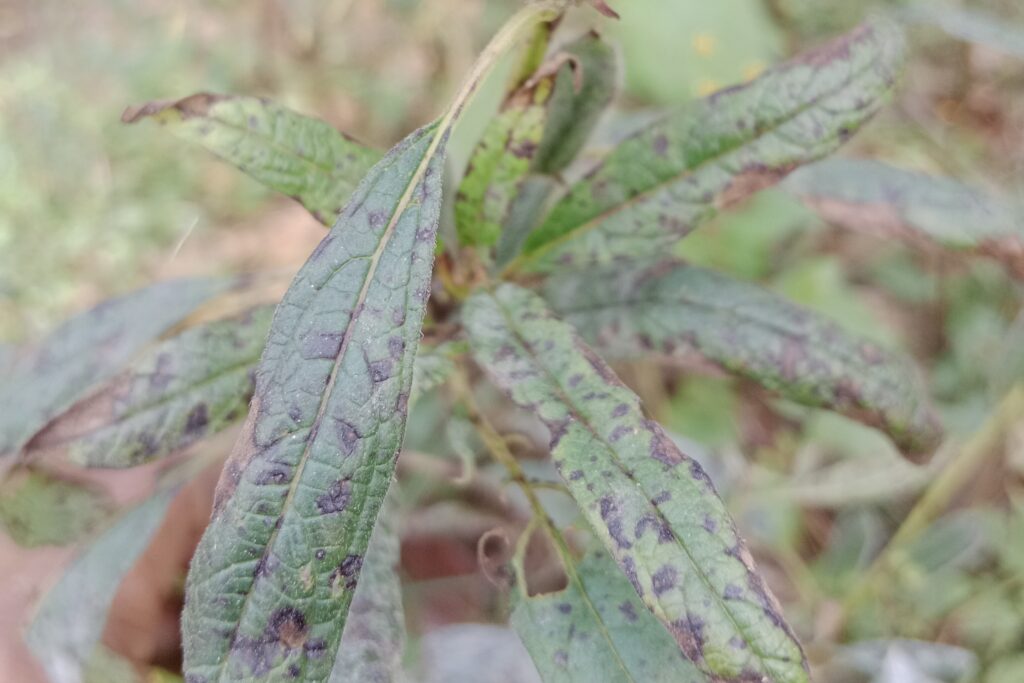
- Initial symptoms appear as small, dark-colored spots that may be circular or irregular in shape
- Lesions gradually increase in size and often show ring-like patterns at the center
- A pale yellow margin may surround the affected area
- In advanced stages, infected leaves dry up, turn brown, and fall off prematurely
Symptoms on Stems
- Dark, elongated lesions develop along the stem surface
- Merging of lesions weakens stem tissues and may predispose plants to lodging
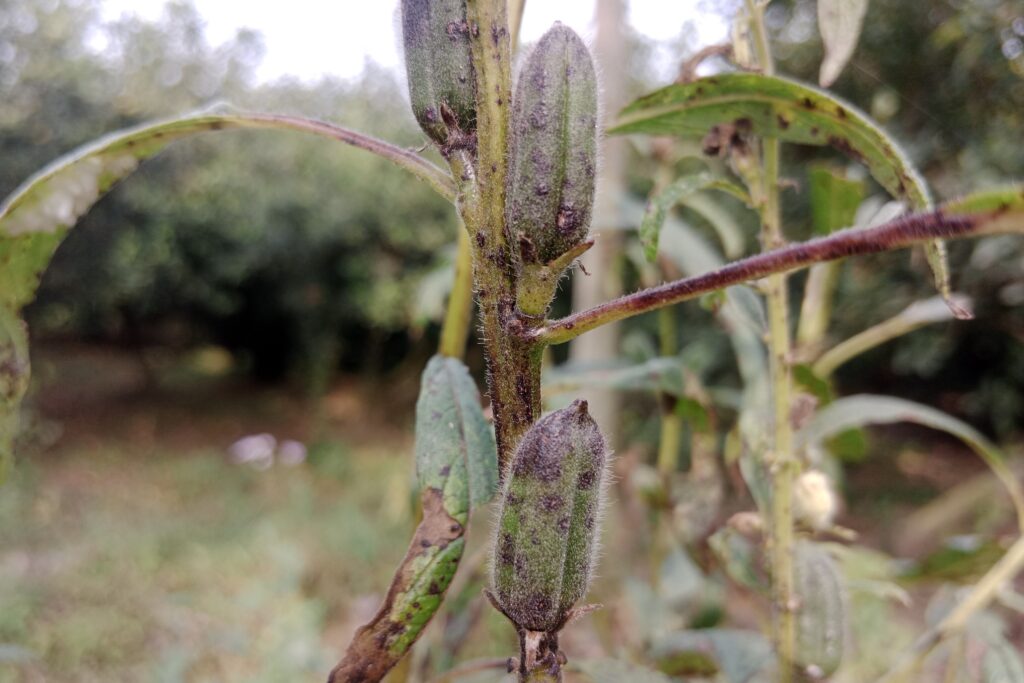
Symptoms of Capsules
- Small dark spots form on the capsule surface and expand over time
- Severely affected capsules may shrink, crack, or produce underdeveloped seeds
Epidemiology
The occurrence and severity of Alternaria leaf blight are strongly influenced by climatic factors. The fungus thrives under warm temperatures, particularly between 25 and 30°C, combined with high relative humidity and extended periods of leaf wetness. Frequent rainfall, dew formation, cloudy weather, and poor air movement within the crop canopy further favor disease development.
The pathogen spreads through airborne spores, rain splash, irrigation water, and physical contact via tools or human activity. Disease symptoms generally begin to appear about one month after sowing and intensify during the reproductive stages of the crop.
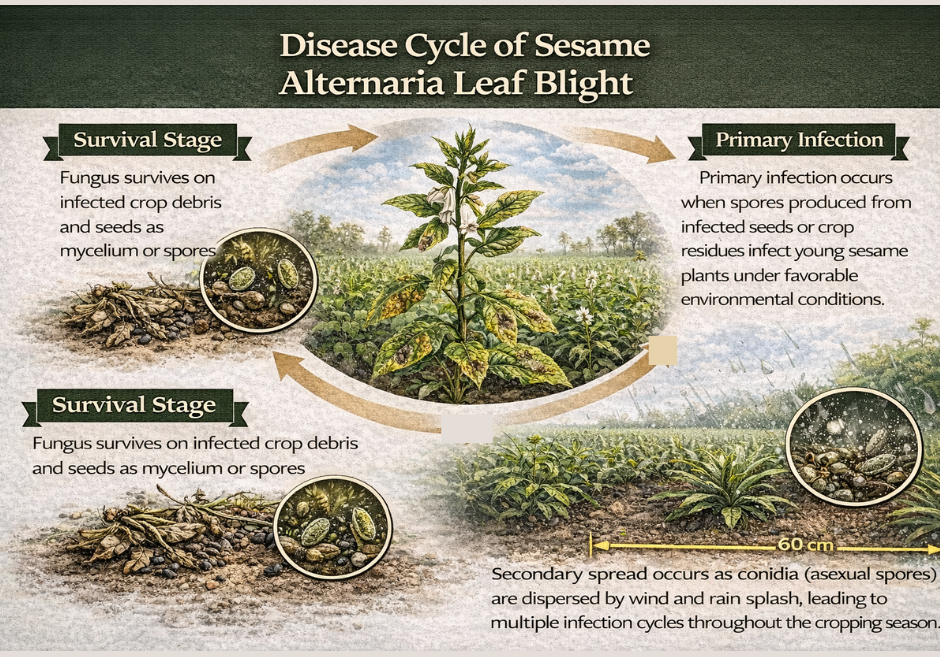
Disease Cycle
Survival Phase
The fungus persists between seasons on infected plant residues and contaminated seeds in the form of mycelium or spores.
Primary Infection
Initial infection occurs when spores originating from crop debris or infected seeds come into contact with young sesame plants under suitable environmental conditions.
Secondary Spread
Once established, the pathogen produces asexual spores that are carried by wind and water, leading to repeated infection cycles during the growing season.
Completion of Cycle
At the end of the season, the fungus returns to plant debris and seeds, serving as a source of inoculum for the following crop.
Disease Management
Effective control of Alternaria leaf blight requires an integrated approach that combines cultural, biological, and chemical methods.
Cultural Practices
- Use healthy, certified seeds for planting
- Practice crop rotation with non-host crops such as cereals or pulses
- Remove and destroy infected crop residues after harvest
- Maintain proper plant spacing to improve air circulation
- Avoid excessive nitrogen fertilization, which promotes dense foliage
- Ensure good field drainage to prevent prolonged moisture retention
Seed Treatment
Treating seeds before sowing helps minimize the risk of seed-borne infection. Seeds may be treated with carbendazim at a rate of 2 g per kilogram of seed, or with a combination of thiram and carbendazim at 3 g per kilogram. These treatments protect seedlings during the early stages of growth.
Biological Management
Since infected seeds can introduce the pathogen into the field, seed treatment plays a key role in disease prevention. Fungicidal seed treatments lower the initial fungal population, encourage healthy seedling establishment, and reduce early disease incidence. This results in stronger plant growth, improved yield potential, and better seed quality.
Chemical Management
Foliar application of fungicides should begin as soon as early symptoms are observed. Fungicides such as mancozeb (0.25%), chlorothalonil (0.2%), and propiconazole (0.1%) are effective in controlling disease spread. If weather conditions remain favorable for disease development, sprays may be repeated at intervals of 10 to 15 days.
Resistant Varieties
Where available, sesame varieties with tolerance or resistance to Alternaria leaf blight should be selected, as they provide long-term and cost-effective disease management.
Frequently Asked Questions
Q1. How can Alternaria leaf blight be managed effectively?
Management begins with the use of clean or fungicide-treated seeds. Crop rotation, proper spacing, balanced fertilizer use, and removal of infected residues help reduce disease pressure. Fungicides such as mancozeb, chlorothalonil, or propiconazole should be applied at the first appearance of symptoms. Biological agents like Trichoderma spp. and Pseudomonas fluorescens can also be included as part of an integrated strategy.
Q2. Can plants recover after leaf blight infection?
Plants can recover if the disease is detected early and appropriate control measures are taken. Removing infected plant parts, improving air circulation, reducing excess moisture, and applying suitable fungicides help limit disease spread and support plant recovery.
Q3. What practices help prevent Alternaria infection?
Preventive measures include using treated seeds, following crop rotation, maintaining field sanitation, ensuring adequate plant spacing, and avoiding overuse of nitrogen fertilizers. Regular monitoring and timely preventive sprays during humid conditions further reduce the risk of infection.
Q4. Where is Alternaria commonly found?
Alternaria species survive in soil, crop residues, and infected seeds, enabling them to persist between growing seasons. The disease is more common in warm and humid environments, particularly in fields with poor drainage or continuous sesame cultivation. Plants are most susceptible during active growth and reproductive stages.