Citrus Pests and Diseases
Citrus Pests and Diseases are among the most critical challenges limiting citrus productivity and fruit quality worldwide. A wide range of insect pests, mites, and pathogenic organisms such as fungi, bacteria, and viruses attack citrus crops at different growth stages, causing yield losses and economic damage. Understanding the major citrus pests and diseases, their symptoms, and effective management strategies is essential for sustainable citrus cultivation and long-term orchard health.
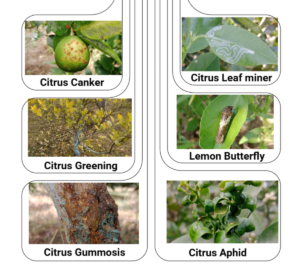
Citrus Canker
Cause
Caused by the bacterium Xanthomonas citri subsp. citri.
Symptoms
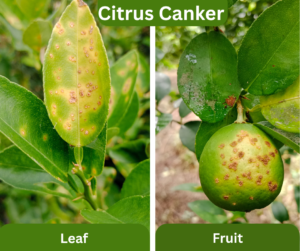
The affected plants exhibit small, water-soaked spots on leaves, fruits, and twigs, which gradually enlarge into raised, corky lesions often surrounded by yellow halos. These symptoms lead to premature leaves fall and fruit drop, while the fruits develop blemishes that render them unmarketable.
Epidemiology
The disease thrives in warm temperatures ranging from 20 to 30°C and under conditions of high humidity, which create an ideal environment for its development. It spreads through multiple pathways, including rain splash, wind, irrigation water, contaminated tools, and infected nursery plants, facilitating rapid transmission within and between fields. Young, actively growing tissues are particularly vulnerable, making seedlings and newly emerged leaves and shoots more prone to infection and contributing to the quick establishment and progression of the disease in susceptible crops.
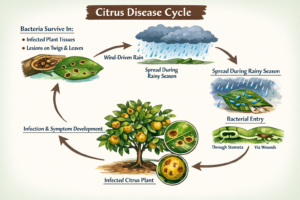
Citrus Canker Disease Cycle
The causal bacteria survive in infected plant tissues, particularly within lesions on leaves and twigs. During the rainy season, the pathogen is spread primarily through wind-driven rain. The bacteria enter healthy plants through natural openings such as stomata or through wounds, initiating new infections that develop into characteristic lesions, which then serve as sources of inoculum for subsequent disease cycles.
Management Practices
Effective management of citrus canker involves using disease-free, certified planting material and regularly pruning and destroying infected twigs to reduce sources of inoculum. Overhead irrigation should be avoided to minimize the spread of bacteria, and proper orchard sanitation should be maintained at all times. Additionally, protective sprays such as copper oxychloride (3 g/L) or Bordeaux mixture (1%) can be applied to prevent infection and limit disease development in the orchard.
Gummosis / Foot Rot
Cause
Caused by soil-borne fungi Phytophthora nicotianae and P. palmivora.
Symptoms
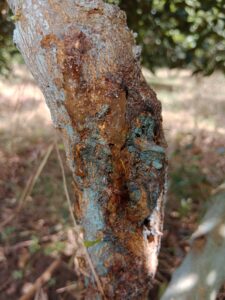
Trees affected by the disease exhibit oozing of gum-like exudates from the trunk, often near the soil level, which is a characteristic sign of infection. The bark around the affected areas develops cracks and begins to peel off, exposing the underlying tissues. Infected trees show yellowing of leaves, stunted or poor growth, and progressive dieback of branches. In severe cases, the disease can lead to the complete death of the tree, significantly affecting orchard productivity and overall plant health.
Epidemiology
This disease commonly occurs in poorly drained soils, where water tends to accumulate and create saturated conditions. Excessive moisture and waterlogging provide an ideal environment for the pathogen to survive and multiply, increasing the risk of infection. The disease spreads primarily through contaminated soil and irrigation water, allowing the pathogen to move from infected areas to healthy plants, particularly under conditions of prolonged wetness. Managing soil drainage and avoiding over-irrigation are therefore critical to reducing disease incidence and limiting its spread within orchards.
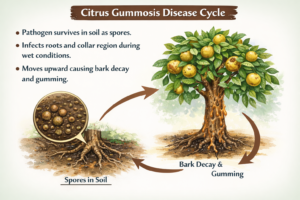
Disease Cycle
The pathogen survives in the soil in the form of resilient spores, which serve as a source of infection during favorable conditions. During periods of excessive moisture or wet conditions, the spores infect the roots and the collar region of the tree. Once inside, the pathogen gradually moves upward through the vascular tissues, causing bark decay and the characteristic oozing of gum, thereby perpetuating the disease cycle.
Management Practices
Effective management of the disease involves several cultural and chemical practices aimed at reducing infection and limiting disease progression. Proper soil drainage should be ensured to prevent waterlogging, and direct contact of the soil with the tree trunk should be avoided to minimize pathogen entry.
Infected bark should be carefully scraped off and treated with protective applications such as Bordeaux paste (1:1:10) to prevent further spread. Additionally, the soil can be drenched with a fungicidal mixture of Metalaxyl and Mancozeb (2 g/L) to target soil-borne spores. Where possible, using tolerant rootstocks, such as rough lemon, can provide additional resistance and help maintain tree health and productivity.
Citrus Greening (Huanglongbing – HLB)
Cause
Caused by bacterium Candidatus Liberibacter asiaticus.
Transmitted by Asian citrus psylla (Diaphorina citri).
Symptoms
Trees affected by yellow shoot disease exhibit a range of visible symptoms, beginning with the yellowing of new shoots, which gives the disease its name. The leaves often show blotchy, asymmetrical mottling, disrupting their normal green appearance. Infected trees produce small, misshapen fruits that are typically bitter in taste, with poor juice content and a high incidence of seed abortion. Over time, the disease leads to progressive decline in overall tree health, reducing vigor, growth, and productivity, and can severely impact orchard yield if left unmanaged.
Epidemiology
The disease spreads primarily through the use of infected planting material and is efficiently transmitted by psylla vectors, which carry the pathogen from infected to healthy plants. Its spread is particularly rapid in warm tropical and subtropical climates, where favorable environmental conditions support high vector populations and facilitate swift transmission, leading to widespread infection in orchards.
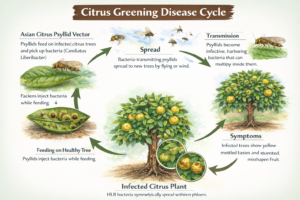
Disease Cycle
The bacteria responsible for the disease multiply within the phloem tissues of infected plants, where they establish a persistent infection. These bacteria serve as a source of inoculum for psylla vectors, which acquire the pathogen while feeding on the sap of affected trees.
Once a psylla becomes infected, it retains the ability to transmit the bacteria for its entire lifespan. This lifelong transmission by the vector enables rapid and continuous spread of the disease to healthy plants, allowing the pathogen to persist and cause widespread infection within orchards.
Management Practices
Citrus Greening (Huanglongbing, HLB) – Chemical Control: There is currently no curative chemical treatment available for Citrus Greening; therefore, management relies primarily on effective control of the insect vector, the citrus psylla (Diaphorina citri).
Systemic insecticides such as Imidacloprid 17.8 SL at 0.3 ml per liter of water, Thiamethoxam 25 WG at 0.25 g per liter, and Acetamiprid 20 SP at 0.4 g per liter are recommended for psylla suppression. Sprays should be precisely timed during the emergence of new vegetative flushes, when psylla populations are most active, to minimize disease spread and protect healthy citrus growth.
Citrus Psylla
Citrus psylla (Diaphorina citri) is a tiny sap-sucking insect that poses a serious threat to citrus orchards worldwide. It feeds on the phloem of citrus plants, causing direct damage through nutrient loss and stress, and more critically, serves as the primary vector for citrus greening disease (Huanglongbing). With its swift reproduction, high mobility, and disease-spreading ability, this pest ranks among the most damaging to citrus crops, especially in tropical and subtropical regions.
Systematic Position
- Order: Hemiptera
- Family: Psyllidae
- Scientific name: Diaphorina citri
Distribution
Citrus psylla is widely distributed across Asia, with significant populations reported in countries such as Nepal and India. Its presence is closely associated with regions where citrus crops are extensively cultivated, particularly in warm tropical and subtropical climates that favor its development and reproduction. The widespread distribution of this pest poses a major challenge to citrus production, as it not only causes direct damage to the plants but also facilitates the spread of serious diseases like citrus greening, impacting orchard health and productivity across the region.
Host Identification
Citrus psylla primarily infests a variety of citrus species, including lemon, lime, mandarin, and sweet orange. These host plants provide the phloem sap that psylla feeds on, supporting its growth, reproduction, and population build-up. The pest shows a preference for young shoots and tender leaves, which are ideal for feeding and egg-laying. Infestation on these hosts not only weakens the plants directly but also facilitates the transmission of bacterial pathogens, such as those causing citrus greening, making these commonly cultivated citrus species highly vulnerable to both pest and disease pressures.
Symptoms and Nature of Damage
Citrus psylla nymphs and adults feed by sucking sap from young shoots, leaves, and tender growth of citrus plants, leading to direct physiological stress. This feeding activity causes characteristic symptoms such as leaf curling, yellowing, and stunted growth, reducing the overall vigor of the tree.
While the direct damage can weaken the plants, the major impact of citrus psylla arises from its role as the primary vector of citrus greening disease (Huanglongbing).
By transmitting the bacterial pathogen during feeding, the pest facilitates the spread of this devastating disease, which severely affects fruit quality, yield, and long-term tree health, making citrus psylla one of the most significant threats to citrus cultivation.
Life Cycle & Seasonal History
Eggs
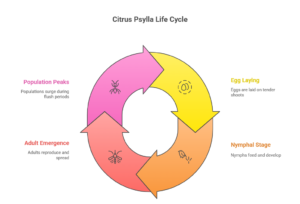
Citrus psylla lays its eggs on tender shoots and young leaves of citrus plants, providing an ideal environment for the emerging nymphs. The eggs are tiny and often difficult to detect, but they hatch into nymphs that begin feeding immediately on the plant sap.
Nymphal
The nymphal stage of citrus psylla lasts approximately 10–15 days, during which the young insects go through several instars, gradually developing into adults. Both nymphs and adults feed on the phloem, causing direct damage to the plant and contributing to the spread of bacterial pathogens.
Adult
Citrus psylla is multivoltine, producing several generations per year, which allows populations to build rapidly under favorable conditions. Population peaks are typically observed during the new flush periods of citrus growth, especially in spring and during the monsoon, when tender shoots are abundant and environmental conditions support rapid reproduction.
Management
Effective management of citrus psylla (Diaphorina citri) requires timely application of recommended insecticides during periods of active vegetative flushing. Systemic and contact insecticides such as Imidacloprid 17.8 SL at 0.3 ml per liter of water, Thiamethoxam 25 WG at 0.25 g per liter, Lambda-cyhalothrin 5 EC at 0.5 ml per liter, and Dimethoate 30 EC at 2 ml per liter are effective in suppressing psylla populations. Sprays should be applied at an interval of 15–20 days during active flush emergence to ensure continuous protection and to reduce the risk of disease transmission.
Citrus Leaf Miner
Citrus leaf miner (Phyllocnistis citrella) is a tiny moth whose larvae tunnel into the leaves of citrus plants, creating winding, serpentine mines. These feeding damages young leaves and shoots, leading to reduced growth and vigor, and can increase the plant’s susceptibility to diseases such as citrus canker. The pest is widespread in citrus-growing regions and poses a significant threat to the development and productivity of young trees.
Systematic Position
- Order: Lepidoptera
- Family: Gracillariidae
- Scientific name: Phyllocnistis citrella
Distribution
Citrus leaf miner is widely distributed across tropical and subtropical regions where citrus is cultivated. Its prevalence is closely associated with areas that support continuous growth of young citrus shoots, which serve as ideal sites for egg-laying and larval development. The pest thrives in warm climates, allowing multiple generations per year, and its presence has been reported in most major citrus-growing countries, posing a persistent challenge to orchard productivity and tree health.
Host Identification
Citrus leaf miner attacks all citrus species, with a particular preference for young plants and newly emerging shoots. The tender leaves of these young trees provide an ideal environment for egg-laying and larval mining, allowing the pest to complete its development efficiently. While mature trees can also be affected, the damage is most severe on seedlings and young saplings, leading to reduced growth, weakened shoots, and increased vulnerability to secondary infections such as citrus canker. Consequently, all citrus species, from lemon and lime to sweet orange and mandarin, are considered susceptible hosts.
Symptoms and Nature of Damage
The larvae of citrus leaf miner feeds by tunneling into young leaves, creating characteristic serpentine mines that are visible as winding trails on the leaf surface. This mining activity causes the leaves to curl, distort, and sometimes dry prematurely, reducing the overall photosynthetic area available for the plant. As a result, the growth and vigor of the tree are compromised, particularly in young plants.
Additionally, the damaged leaves and shoots become more susceptible to secondary infections, notably citrus canker, as the feeding sites provide entry points for bacterial pathogens, exacerbating overall tree stress and reducing productivity.

Life Cycle & Seasonal History
Egg
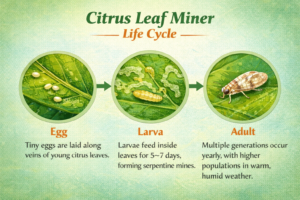
Citrus leaf miner begins its life cycle when adult moths lay eggs on the surface of young citrus leaves. The eggs are tiny and usually deposited along the leaf veins, where they are well-protected and close to feeding sites for the emerging larvae.
Larva
After hatching, the larval stage lasts approximately 5–7 days. During this period, the larvae tunnel into the leaf tissue, creating the distinctive serpentine mines that cause curling, distortion, and drying of the leaves.
Adult
Citrus leaf miner can produce multiple generations per year, especially in regions with favorable environmental conditions. Its population tends to increase significantly during warm and humid periods, which provide optimal conditions for rapid development, high survival rates, and successive overlapping generations.
Chemical Control
Effective control of citrus leaf miner (Phyllocnistis citrella) depends on timely insecticide application targeting the early larval stage on newly emerging leaves. Recommended insecticides include Abamectin 1.9 EC at 1 ml per liter of water, Spinosad 45 SC at 0.5 ml per liter, Imidacloprid 17.8 SL at 1 ml per liter, and Chlorantraniliprole 18.5 SC at 0.5 ml per liter. Applications should be synchronized with new flush emergence to prevent leaf mining, reduce leaf damage, and maintain healthy citrus canopy development.
Lemon Butterfly
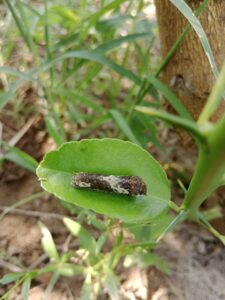
The Lemon Butterfly (Papilio demoleus) is a common and widespread pest of citrus plants, particularly lemon and lime. Its larvae feed voraciously on young leaves and shoots, causing significant defoliation and reducing plant vigor. This pest is highly adaptable and can complete multiple generations per year, making it a persistent threat to citrus orchards in tropical and subtropical regions.
Systematic Position
- Order: Lepidoptera
- Family: Papilionidae
- Scientific name: Papilio demoleus
Distribution
Widely distributed in South Asia.
Host Identification
Lemon, lime, orange, curry leaf plant.
Nature and Extent of Damage
The caterpillars of the lemon butterfly cause serious damage by feeding voraciously on citrus leaves, often leading to complete defoliation of the plants. This type of damage is particularly severe in nurseries and young orchards, where seedlings and young trees are highly vulnerable. Extensive leaf loss reduces the plant’s photosynthetic capacity, weakens overall growth, and delays establishment, making young citrus plants more susceptible to stress, diseases, and reduced future productivity.
Life Cycle & Seasonal History
Eggs
The lemon butterfly begins its life cycle when the female lays eggs singly on the surface of citrus leaves. This solitary egg-laying behavior reduces competition among larvae and ensures sufficient food availability for the developing caterpillars.
Larval
After hatching, the larval stage lasts about 2–3 weeks. During this period, the caterpillars feed actively on citrus leaves and tender shoots, often causing extensive defoliation, especially in young plants and nursery seedlings.
Pupa
Once larval development is complete, pupation occurs on twigs or nearby plant parts, where the pupa remains attached until adult emergence.
Adult
Adult lemon butterflies are most active during the monsoon and post-monsoon seasons, when warm temperatures and high humidity favor their activity, mating, and egg-laying, leading to increased pest incidence during these periods.
Chemical Control
Chemical management of the lemon butterfly (Papilio demoleus) should be initiated when economic threshold levels are reached, particularly when 1–2 larvae per plant are observed. Effective insecticides include Chlorpyrifos 20 EC at 2 ml per liter of water, Lambda-cyhalothrin 5 EC at 1 ml per liter, and Emamectin benzoate 5 SG at 0.4 g per liter. Timely application at the early larval stage helps prevent severe defoliation and ensures healthy growth of lemon plants.
Citrus Aphid
Citrus aphids are a common sap-sucking pest of citrus crops, particularly affecting young shoots, leaves, and tender growth. By feeding plant sap, aphids cause leaf curling, yellowing, and stunted growth, weakening the overall vigor of the plant. In addition to direct damage, citrus aphids are important vectors of viral diseases, making them a serious threat to citrus production, especially in tropical and subtropical regions.
Systematic Position
- Order: Hemiptera
- Family: Aphididae
- Scientific name: Toxoptera citricida
Distribution
Common in citrus orchards worldwide.
Host Identification
Citrus species and related plants.
Symptoms & Nature of Damage
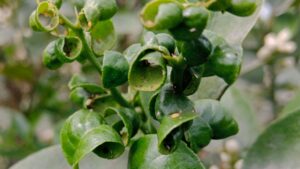
Citrus aphids cause damage by sucking sap from young leaves and shoots, which results in leaf curling, yellowing, and overall stunted growth of the plants. Their feeding activity also produces honeydew, a sticky substance that promotes the development of sooty mould on leaf surfaces, reducing photosynthesis and plant vigor. In addition to these direct effects, citrus aphids are major vectors of citrus tristeza virus, making them particularly harmful to citrus orchards.
Life Cycle & Seasonal History
Citrus aphids reproduce very rapidly, often through parthenogenesis, where females give birth to live young without mating. This reproductive strategy allows aphid populations to build up quickly, especially when host plants produce fresh, tender growth.
Because of their fast reproductive rate, citrus aphids complete several generations within a single year. This leads to overlapping generations and sudden population outbreaks if conditions remain favorable.
Aphid populations tend to increase significantly during cool and humid weather, which provides optimal conditions for survival and multiplication. Such environmental conditions, combined with the availability of young shoots, often result in heavy infestations in citrus orchards.
Chemical Control
Effective management of citrus aphids requires timely application of recommended systemic and contact insecticides to suppress populations and reduce virus transmission. Imidacloprid 17.8 SL at 0.3 ml per liter of water, Thiamethoxam 25 WG at 0.25 g per liter, Acetamiprid 20 SP at 0.4 g per liter, and Dimethoate 30 EC at 2 ml per liter are commonly recommended for aphid control. For improved spray coverage and enhanced efficacy, a sticker or spreader should be added at 0.5 ml per liter of spray solution, ensuring thorough wetting of tender shoots and leaf undersides.
Citrus Mealy Bug
Citrus mealy bug is a common sap-sucking pest that attacks citrus plants by infesting leaves, shoots, fruits, and sometimes roots. It feeds by extracting plant sap, leading to weakened growth, leaf yellowing, and fruit drop. The pest also secretes honeydew, which encourages the development of sooty mould and reduces photosynthesis, making citrus mealy bug a significant problem in citrus orchards, particularly in warm and humid regions.
Systematic Position
- Order: Hemiptera
- Family: Pseudococcidae
- Scientific name: Planococcus citri
Distribution
Found in all citrus-growing regions.
Host Identification
Citrus, guava, grape, ornamental plants.
Symptoms & Nature of Damage
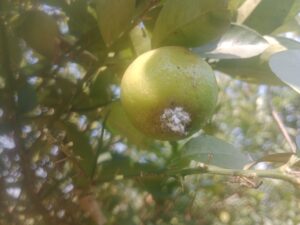
Citrus mealy bugs cause damage by sucking sap from leaves, twigs, and fruits, leading to general weakening of the plant. Their feeding results in symptoms such as leaf yellowing, wilting, and premature fruit drop, which directly affect orchard productivity. In addition, mealy bugs secrete honeydew, a sticky substance that encourages the growth of sooty mould on plant surfaces, reducing photosynthetic efficiency. The combined effects of sap loss, sooty mould development, and fruit damage significantly reduce fruit quality and overall yield in citrus crops.
Life Cycle & Seasonal History
Eggs
Citrus mealy bugs lay their eggs in characteristic white, cottony masses found on leaves, twigs, fruits, or in protected crevices of the plant. These egg masses provide protection to the developing eggs and allow large numbers to hatch at the same time.
Nymphs
After hatching, the young nymphs, commonly called crawlers, are the most active stage and play a major role in spreading the infestation. They move to new feeding sites on the same plant or are dispersed to nearby plants by wind, tools, ants, or other mechanical means.
Adult
Mealy bugs produce several overlapping generations throughout the year, enabling populations to persist and increase rapidly under favorable conditions. Infestations are particularly severe during dry and warm weather, which favors their survival and multiplication, leading to heavy damage in citrus orchards if not properly managed.
Chemical Control
Effective chemical management of citrus mealy bug requires targeting the crawler stage, which is the most vulnerable phase of the pest. Systemic and contact insecticides such as Imidacloprid 17.8 SL at 0.5 ml per liter of water, Chlorpyrifos 20 EC at 2.5 ml per liter, Buprofezin 25 SC at 1 ml per liter, and Spirotetramat 150 OD at 0.5 ml per liter are recommended for effective control. Applications should ensure thorough coverage of infested shoots, leaf axils, and fruit clusters to achieve maximum suppression of mealy bug populations.
ALSO READ: BEST FERTILIZERS OF LEMON
References
Food and Agriculture Organization (FAO)
University of California Agriculture & Natural Resources (UC ANR)
European Plant Protection Organization (EPPO)
Punjab Agricultural University (PAU)
Tamil Nadu Agriculture University (TNAU) – Agritech portal
Indian Council of Agricultural Research (ICAR)
Nepal Agricultural Research Council (NARC)
U.S. Department of Agriculture (USDA).
Ministry of Agriculture and Livestock Development (Nepal)