
Rice Diseases
Rice is one of the world’s most important staple crops, feeding more than half of the global population. However, rice production is severely affected by a wide range of diseases caused by fungi, bacteria, viruses, and nematodes. Early identification and proper management are essential to reduce yield losses and ensure profitable rice cultivation. This guide covers all major rice diseases and their control.
Rice Blast
| Disease | Rice Blast | |
| Causal Organism | Magnaporthe oryzae | |
| Economic Loss | Up to 70% yield loss during severe outbreaks | |
| High-Risk Stages | Seedling stage, Tillering stage, Panicle/Neck stage | |
| Favorable Climate | High humidity, frequent rainfall, prolonged leaf wetness, and moderate temperatures (25–28°C) | |
Symptoms
Rice blast manifests through several distinct symptoms that affect multiple parts of the rice plant. Infected leaves develop diamond- or spindle-shaped lesions with grayish centers, which often reduce the plant’s photosynthetic capacity.
The disease can also cause neck rot, leading to poorly filled or empty panicles, directly impacting grain yield. Additionally, fungus infects the collar region and nodes, weakening the plant structure and making it more susceptible to lodging, further contributing to significant yield losses if not managed promptly.
Management
Effective management of rice blast involves an integrated approach that combines the use of resistant varieties such as IR64 and Swarna types, alongside balanced nitrogen application to prevent excessive vegetative growth, maintaining good field sanitation by removing infected stubbles and weeds, and ensuring proper crop spacing for aeration.
During outbreaks, chemical control becomes necessary, with recommended fungicides including Tricyclazole 75% WP at 0.6 g/L of water, Carbendazim 50% WP at 1 g/L, Azoxystrobin 18.2% + Difenoconazole 11.4% SC at 1 ml/L, or Isoprothiolane 40% EC at 1.5 ml/L, which should be applied at early disease appearance and repeated after 10–12 days if required. Ultimately, integrating resistant varieties, sound agronomic practices, and timely fungicide sprays provides the most effective control strategy for rice blast.
Brown Spot
| Aspect | Details | |
| Disease | Brown Spot | |
| Causal Agent | Bipolaris oryzae | |
| Economic Loss | 10–50% yield reduction, depending on severity and crop conditions. | |
| High-risk Stage | Seedling and tillering stages are most vulnerable. | |
| Favorable Climate | Warm, humid conditions with frequent rainfall and poor soil fertility. | |
Symptoms
Brown Spot disease, caused by Bipolaris oryzae, is characterized by the appearance of brown, circular spots on the leaves, which can coalesce under severe infection, reducing the photosynthetic area of the plant. In seedlings, the disease often leads to poor establishment, resulting in weak and stunted plants.
During advanced stages or under favorable conditions, panicle infection may occur, affecting grain formation and further reducing yield. These symptoms collectively contribute to significant yield losses, particularly in stressed or nutrient-deficient crops.
Management
Effective control of Brown Spot begins with using disease-free seeds treated with Carbendazim 50% WP at 2 g/kg of seed or Captan 50% WP at 2–3 g/kg of seed to prevent initial infection, supported by proper nutrition through adequate nitrogen and potash to strengthen plant resistance.
During the crop season, monitoring for symptoms is essential, and if infection occurs, foliar fungicides such as Mancozeb 75% WP at 2–2.5 g/L of water, Propiconazole 25% EC at 1 ml/L, or Azoxystrobin 23% SC at 1 ml/L should be applied at early disease appearance and repeated after 10–12 days if necessary. Integrating seed treatment, balanced fertilization, good field sanitation, and timely fungicide application provides the most effective strategy to minimize yield losses from this disease.
Sheath Blight
| Aspect | Details |
| Disease | Sheath Blight |
| Causal Agent | Rhizoctonia solani |
| Economic Loss | 20–50% yield reduction under favorable conditions. |
| High-risk Stage | Tillering to panicle initiation stages. |
| Favorable Climate | Warm, humid conditions with high rainfall or continuous irrigation, especially with close plant spacing leading to prolonged leaf wetness. |
Symptoms
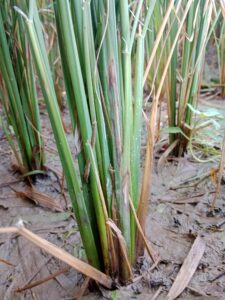
Sheath Blight caused by Rhizoctonia solani manifests as irregular, water-soaked lesions on the leaf sheaths, which gradually enlarge and may coalesce, affecting multiple leaves. A characteristic web-like fungal growth often appears on the affected tissues, indicating active infection. In severe cases, the disease weakens the plant structure, leading to lodging during the later stages of crop growth, which significantly reduces yield and grain quality.
Management
To effectively control Sheath Blight and minimize yield losses, an integrated approach should be used, beginning by avoiding dense planting and ensuring proper spacing to improve air circulation and reduce prolonged leaf wetness.
This should be combined with adequate nutrition, particularly the application of potassium at recommended rates to strengthen plant resistance against the pathogen. When disease symptoms appear, foliar fungicides should be applied promptly, such as Validamycin 3% WP at 2 g per liter of water or Hexaconazole 5% EC at 1 ml per liter, with spraying initiated at the early appearance of lesions and repeated after 10–12 days if necessary.
Bakanae Disease
| Aspect | Details |
| Disease | Bakanae Disease |
| Causal Agent | Fusarium fujikuroi (a seed-borne fungal pathogen) |
| Economic Loss | 10–70% yield reduction |
| High-risk Stage | Seedling stage (most vulnerable); symptoms may appear throughout vegetative growth. |
| Favorable Climate | Warm temperatures (25–35°C) with high humidity, especially in nurseries with poor drainage or overcrowding. |
Symptoms
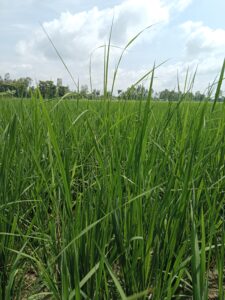
Bakanae Disease, is characterized by excessive elongation of seedlings, giving them a tall, spindly appearance. Infected plants often exhibit pale green to yellowish leaves, which may eventually wilt and die.
The disease can also cause stunted tillering, empty panicles, and poor grain filling, leading to significant yield loss. In severe cases, infected seedlings may collapse entirely, particularly in nursery beds with high humidity and poor drainage, making early detection and management crucial.
Management
Effective management of Bakanae disease begins with using disease-free seeds treated with Carbendazim 50% WP at 3 g per kg of seed prior to sowing to prevent initial infection, while nursery seedlings can be further protected by soaking them in Bavistin 50% WP at 2 g per liter of water for 5–6 hours before transplanting, and during the growing season, foliar application of Hexaconazole 5% EC at 2 ml per liter of water helps control the spread of the pathogen if disease symptoms appear.
Bacterial Leaf Blight (BLB)
| Aspect | Details |
| Disease | Bacterial Leaf Blight (BLB) |
| Causal Agent | Xanthomonas oryzae |
| Economic Loss | 20–80% yield loss |
| High-risk Stage | Tillering to booting stage |
| Favorable Climate | High humidity, frequent rainfall, cloudy weather, warm temperatures (25–34°C), and fields with standing water or poor drainage. Wind-driven rain and storms further increase spread. |
Symptoms
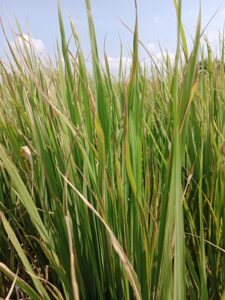
Bacterial Blight typically begins with yellowing near the leaf tip, which gradually spreads down the leaf blade. As the infection progresses, long, water-soaked lesions appear along the leaf margins, eventually turning yellowish-brown to dark brown, often giving the leaves a scorched appearance.
In severe early infections, especially in young plants, the disease may cause “kresek,” a condition characterized by the sudden wilting and drying of seedlings, leading to plant death. These symptoms significantly reduce the plant’s ability to photosynthesize, ultimately impacting tillering, grain filling, and overall yield.
Management
Effective control of Bacterial Blight involves integrating several strategies, beginning by avoiding heavy nitrogen application as excessive nitrogen increases plant susceptibility to infection, while at the field level, removing and destroying infected plants helps prevent further spread, especially during early outbreaks.
Chemical management can be achieved by spraying copper-based bactericides such as Copper Oxychloride 50% WP at 2.5–3 g per liter of water or Copper Hydroxide 77% WP at 2 g per liter, applied at the first sign of symptoms and repeated after 7–10 days if needed; ultimately, combining resistant varieties, balanced nutrition, sanitation, and timely bactericide sprays provides the most effective approach to minimize yield loss.
Bacterial Leaf Streak
| Aspect | Details |
| Disease | Bacterial Leaf Streak |
| Causal Agent | Xanthomonas oryzae pv. oryzicola |
| Economic Loss | 10–30% yield loss |
| High-risk Stage | Tillering to heading stage |
| Favorable Climate | Warm, humid weather, frequent rainfall, cloudy conditions, and continuous leaf wetness; spreads rapidly in fields with wind-driven rain, poor drainage, and dense plant populations. |
Symptoms
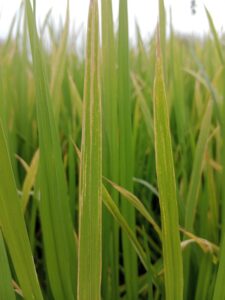
Bacterial Leaf Streak, caused by Xanthomonas oryzae pv. oryzicola, is characterized by the appearance of thin, yellow-orange streaks that develop between the leaf veins, gradually enlarging and coalescing as the infection progresses. These streaks may become translucent when held against the light, giving the leaves a distinct striped appearance.
Under humid or wet conditions, the lesions often exude tiny droplets of bacterial ooze, which dry into yellowish, varnish-like flakes on the leaf surface. As the disease spreads, large portions of the leaf lose their photosynthetic efficiency, leading to reduced vigor and lower grain yield.
Management
At the early appearance of symptoms, chemical management can be applied using Copper Oxychloride 50% WP at 2.5–3 g per liter of water, which helps suppress bacterial multiplication and slow disease progression, and integrating clean seeds, good field sanitation, and timely copper sprays provides effective control of Bacterial Leaf Streak to protect crop yield.
Rice Tungro Disease (RTD)
| Aspect | Details |
| Disease | Rice Tungro Disease (RTD) |
| Causal Agent | Rice Tungro Bacilliform Virus (RTBV) |
| Economic Loss | 20–70% yield loss |
| High-risk Stage | Seedling to early tillering stage |
| Favorable Climate | Warm, humid climates during high leafhopper activity and low rainfall; risk increases in fields with infected volunteer rice or ratoon crops acting as reservoirs, and with continuous rice cultivation without breaks. |
Symptoms
Rice Tungro Disease is characterized by the development of orange-yellow discoloration of the leaves, usually starting from the tip and gradually spreading downward, giving the plant a distinct yellowish appearance. Infected plants exhibit stunted growth, remaining significantly shorter than healthy ones due to reduced internode elongation.
The disease also leads to reduced tillering, resulting in fewer productive shoots. As the infection progresses, the panicles often show partial or poor grain filling, and in severe cases, may produce almost no grains at all. These combined symptoms drastically reduce yield, especially when infection occurs at early growth stages.
Management
Management of Rice Tungro Disease focuses on breaking the virus–vector cycle by using resistant varieties and preventing the buildup of green leafhoppers, the primary vectors. Controlling leafhopper populations is essential, and this can be done by spraying Imidacloprid 17.8% SL at 0.3 ml per liter of water or Dinotefuran 20% SG at 0.4 g per liter, applied at early vector presence and repeated as needed based on field monitoring.
Cultural practices such as avoiding overlapping crops and maintaining a break between rice seasons help disrupt the continuous virus reservoir. Additionally, removing infected clumps from the field prevents further spread of both the virus and the vector, ensuring healthier crop stands and reducing overall tungro incidence.
Rice Ragged Stunt Virus (RRSV)
| Aspect | Details |
| Disease | Rice Ragged Stunt Virus (RRSV) |
| Causal Agent | Reovirus (Rice ragged stunt virus) |
| Vector | Brown planthopper (Nilaparvata lugens) |
| Economic Loss | Can cause 20–70% yield reduction. |
| High-risk Stage | Seedling to early tillering stage. |
| Favorable Climate | Warm, humid conditions; risk increases with continuous cultivation and volunteer rice plants. |
Symptoms
Rice Tungro Disease infected plants often exhibit twisted and deformed leaves, with ragged or uneven leaf edges, giving the foliage a distorted appearance. The disease also causes stunted growth, with plants remaining significantly shorter than healthy counterparts due to inhibited internode elongation.
These symptoms, combined with reduced tillering and poor panicle development, severely compromise the plant’s ability to photosynthesize and produce grains, leading to substantial yield losses, especially when infection occurs at the early seedling stage.
Management
Planting BPH-resistant rice varieties helps reduce pest buildup and minimize damage. Maintaining clean bunds and proper field sanitation eliminates alternative breeding sites and reduces pest pressure.
When BPH populations reach economic threshold levels, chemical control can be applied using systemic insecticides such as Imidacloprid 17.8% SL at 0.3 ml per liter of water or Dinotefuran 20% SG at 0.2–0.25 g per liter, spraying at the early appearance of nymphs and adults. Integrating resistant varieties, good field hygiene, and timely insecticide application ensures effective control of BPH and prevents yield loss.
False Smut
| Aspect | Details |
| Disease | False Smut |
| Causal Agent | Ustilaginoidea virens |
| Economic Loss | 10–75% yield reduction |
| High-risk Stage | Booting to heading stage |
| Favorable Climate | Warm, humid conditions with high rainfall, high relative humidity, and temperatures of 25–30°C, especially in fields with dense canopy and excessive nitrogen fertilization. |
Symptoms
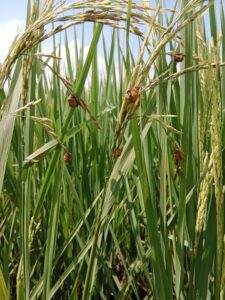
False Smut symptom is characterized by the formation of greenish, spore-filled balls that replace normal rice grains on the panicles. As the disease progresses, these smut balls gradually turn orange yellow to golden brown, indicating maturation of the fungal spores. Infected grains are completely destroyed, leading to reduced grain quality and yield, and severe infections can significantly impact both the quantity and marketability of the harvested rice.
Management
To effectively reduce the incidence of False Smut and protect both grain yield and quality, it is essential to integrate several management strategies, beginning by avoiding excessive nitrogen application to prevent dense and lush growth that favors fungal development, and at the booting stage, applying a fungicide such as Propiconazole 25% EC at 1 ml per liter of water to ensure thorough coverage of the panicles and suppress infection, while overall integrating clean seeds, balanced fertilization, and this timely fungicide application provides the most effective control.
Sheath Rot
| Aspect | Details |
| Disease | Sheath Rot |
| Causal Agent | Sarocladium oryzae |
| Economic Loss | 10–50% yield reduction |
| High-risk Stage | Booting to flowering stage |
| Favorable Climate | Warm, humid conditions with high rainfall or frequent irrigation; also favored by dense plantings and excessive nitrogen fertilization. |
Symptoms
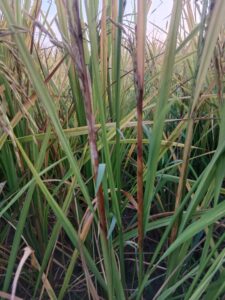
Sheath Rot is characterized by the rotting of the uppermost leaf sheath, often starting near the collar region and progressing upward. Infected tissues show brown discoloration, which can spread to adjacent leaf sheaths and sometimes affect the panicle.
The disease also results in chaffy or partially filled panicles, reducing grain quality and yield. Severe infections can significantly impact photosynthesis and grain formation, leading to notable losses in both yield and harvestable produce.
Management
Applying balanced nitrogen is essential, as excessive nitrogen promotes lush growth, making plants more susceptible to the disease. When symptoms appear, foliar application of fungicides such as Carbendazim 50% WP at 1 g per liter of water or Propiconazole 25% EC at 1 ml per liter of water effectively suppresses the pathogen.
Sprays should be applied at the early stages of disease development, with thorough coverage of the uppermost sheaths and flag leaves. Integrating proper nutrition with timely fungicide applications ensures effective control of Sheath Rot and protects both grain yield and quality.
Root-Knot Nematode
| Aspect | Details |
| Disease/Pest | Root-Knot Nematode Disease |
| Causal Agent | Meloidogyne graminicola (root-knot nematode) |
| Economic Loss | 10–50% yield reduction |
| High-risk Stage | Seedling to tillering stage |
| Favorable Climate | Thrives in warm, wet conditions with poorly drained soils, particularly in puddled or irrigated fields. |
General Symptoms
Root-Knot nematode (Meloidogyne graminicola) infestation in rice is characterized by a range of noticeable symptoms. Infected plants often exhibit twisted, distorted, or chlorotic leaves, reflecting impaired nutrient and water uptake.
The roots develop galls or swellings, which interfere with normal root function and reduce the plant’s ability to absorb water and nutrients efficiently. In severe cases, plants may become stunted and show patchy growth in the field, with affected areas producing fewer tillers and poorly filled grains, ultimately leading to significant yield losses.
Management
Integrating several management strategies provides effective suppression of root-knot nematodes and promotes healthy crop growth, beginning with crop rotation using non-host crops to break the nematode life cycle and using nematode-free nursery soil to prevent initial infestation in seedlings.
Soil solarization—which involves covering moist soil with transparent polyethylene sheets for 4–6 weeks during hot months—effectively reduces nematode populations, and biological control can be applied using bio-nematicides such as Paecilomyces lilacinus or Purpureocillium lilacinum at 2–3 kg per hectare, mixed into the soil or applied in nursery beds.
Khaira Disease
| Aspect | Details |
| Disease | Khaira Disease |
| Caused by | Zinc (Zn) deficiency in rice plants (nutritional disorder, not a pathogen) |
| Economic Loss | 20–80% yield loss depending on severity and growth stage |
| High-Risk Stage | Early seedling stage and early vegetative stage (15–35 days after transplanting) |
| Favorable Climate / Conditions | High pH soils, calcareous soils, high bicarbonate in irrigation water, low organic matter, waterlogged fields, cool and cloudy weather |
General Symptoms
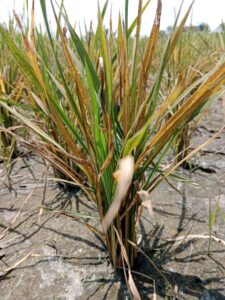
Khaira disease in rice is characterized by the appearance of brown, rusty or bronze-colored spots on the leaves, beginning as small water-soaked lesions that later turn brown and give the foliage a scorched look. Affected leaves often show chlorosis, especially between the veins, and may become brittle as the disease progresses.
Young leaves turn pale or yellow, while older leaves develop necrotic patches and may dry prematurely. In severe cases, plants exhibit stunted growth, reduced tillering, and weak root systems, ultimately leading to poor crop establishment and significant yield reduction.
Management
Khaira disease in rice can be effectively managed by supplying adequate zinc through soil application, foliar sprays, and improved soil health practices. The most reliable method is applying 25 kg/ha of Zinc Sulfate (ZnSO₄·7H₂O) or 16 kg/ha of Zinc Sulfate (ZnSO₄·H₂O) mixed with 250–500 kg of well-decomposed FYM uniformly before transplanting to ensure long-term zinc availability.
For standing crops already showing symptoms, a 0.5% foliar spray of zinc sulfate prepared by mixing 5 g zinc sulfate + 2.5 g lime per liter of water should be sprayed twice at 7–10-day intervals for quick recovery. In nursery beds, zinc deficiency can be prevented by applying 2 kg/ha zinc sulfate or spraying a 0.5% zinc sulfate + lime solution before transplanting.
Additionally, improving soil organic matter by adding 10–15 tons/ha FYM or compost, avoiding high-bicarbonate irrigation water, and maintaining proper drainage help enhance zinc availability and reduce the risk of Khaira disease.
Sources
Food and Agriculture Organization (FAO)
Tamil Nadu Agriculture University (TNAU)
Pingback: 10 Astounding Major insect pest of rice in India