Rohu Farming
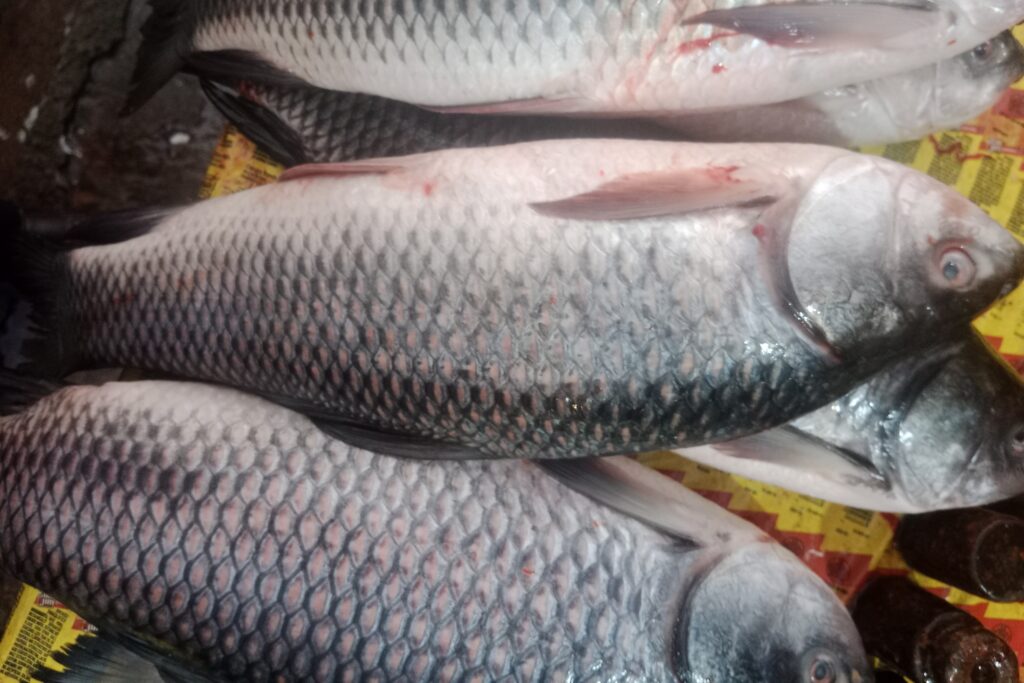
Rohu is a major carp species, highly prized for its taste and market demand across South Asia. It’s a column-feeding (mid-water) fish, well-suited for polyculture (mixed farming with other carp species like Catla and Mrigal). Its fast growth rate (reaching 1-1.5 kg in 10-12 months), adaptability to pond conditions, and consistent consumer preference make it the backbone of commercial aquaculture in Nepal’s plains.
Rohu farming can be a highly profitable venture when managed effectively. The enterprise typically requires a one-time capital investment of around NRs. 285,000 for pond construction, pumps, nets, and other infrastructure, along with annual operating costs of approximately NRs. 460,000 to cover fingerlings, feed, labor, and other recurring expenses. With a projected annual yield of 4,000 kg sold at an average farm-gate price of NRs. 200 per kg, total revenue reaches NRs. 800,000, resulting in a gross annual profit of NRs. 340,000.
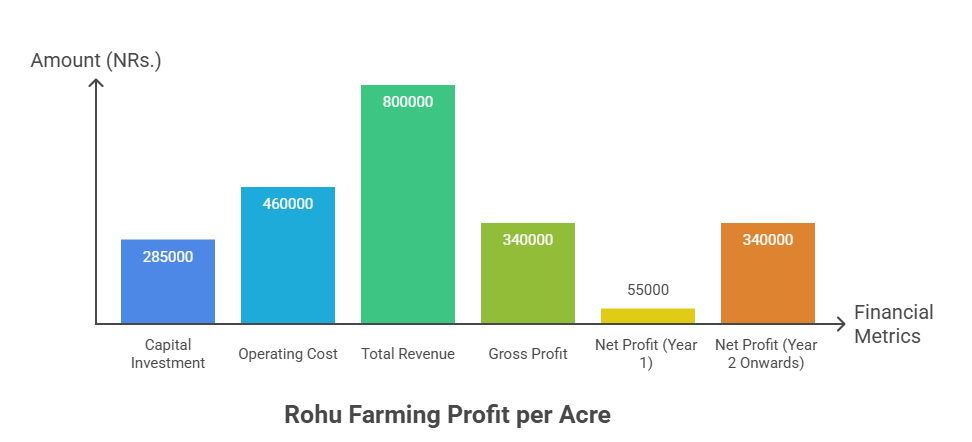
In the first year, after accounting for the full capital investment, the net profit is NRs. 55,000, reflecting a modest but positive return on investment. From the second year onward, with capital costs already covered, the annual net profit reaches the full gross profit of NRs. 340,000, yielding a robust and sustainable ROI of approximately 119% on the initial investment. Considering these figures, the Rohu farming profit per acre demonstrates strong financial potential, making it an attractive and viable agri-business option.
Farm Size and Production System
A 1-acre farm (43,560 sq. ft.) is considered a practical and manageable size for semi-intensive aquaculture, where the semi-intensive polyculture system is the most common and profitable approach. In this system, Rohu typically makes up 50–60% of the stocking ratio and is combined with complementary species such as Catla (15–20%, a surface feeder), Naini/Mrigal (20–25%, bottom feeders), and sometimes Common Carp (5–10%) to fully utilize all ecological niches of the pond and maximize overall yield.
Semi-intensive management relies on both natural pond productivity, enhanced through fertilization, and supplemental feeding, offering Nepalese farmers an optimal balance between cost, risk, and production efficiency.
Pond Construction
Pond construction is a crucial foundation for successful aquaculture, and selecting the right location is the first priority, ensuring access to clean and reliable water sources such as borewells, canals, or rivers, along with nearby electricity, road connectivity, and clayey or loamy soil capable of retaining water effectively. A standard design typically includes either one rectangular pond covering 1 acre or two ponds of 0.5 acre each for better management and flexibility.
The pond should have a depth of 5–6 feet (1.5–1.8 meters) at the deeper end with a gentle slope to help maintain stable water temperature and improve drainage efficiency. Strong, well-compacted dykes with a top width of at least 2–3 meters are essential to support movement around the pond and prevent soil erosion.
Properly designed inlet and outlet structures fitted with screens ensure controlled water flow, enhance water quality management, and prevent fish from escaping during water exchange or overflow. In Nepal, the total construction and digging cost for such a pond generally ranges from NPR 150,000 to NPR 300,000 per acre, depending on soil type, location, availability of machinery, and local labor rates.
Pond Preparation
Pond preparation is essential before each stocking cycle to create a healthy and conducive environment for fish growth.
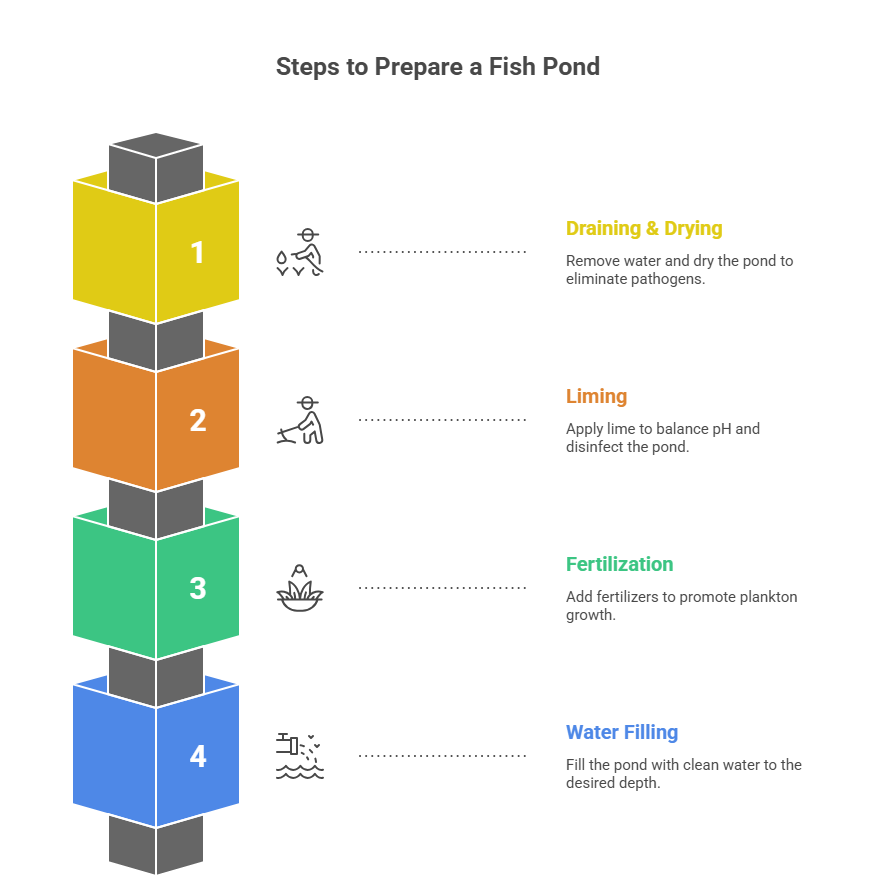
a). Draining & Drying
Draining and drying the pond is a crucial first step in pond preparation, as it helps eliminate harmful pathogens, parasites, and unwanted aquatic organisms that may affect the next production cycle.
The process involves completely draining all water from the pond and allowing the pond bottom to sun-dry for 1–2 weeks, during which the intense heat and UV rays naturally disinfect the soil, break down organic waste, and improve overall pond hygiene. This drying period also helps oxidize harmful gases such as ammonia and hydrogen sulfide trapped in the mud, ensuring a healthier environment when the pond is refilled.
b). Liming
Liming is an important step in pond preparation, serving multiple purposes such as disinfecting the pond environment, balancing soil and water pH to an optimal range of 7.5–8.5, and improving overall soil quality to support healthy fish growth. Farmers typically use agricultural lime (CaCO₃) or quick lime (CaO), depending on availability and soil conditions.
The recommended dosage is 100–200 kg per acre, which should be applied evenly across the dry pond bottom and pond walls to ensure uniform effectiveness. Proper liming not only enhances water quality but also promotes beneficial microbial activity, creating a favorable environment for plankton development and reducing the risk of disease outbreaks during the culture cycle.
c). Fertilization
Fertilization plays a vital role in preparing the pond by promoting the growth of natural plankton—both phytoplankton and zooplankton—which serve as the primary natural food source for fish. To enrich the pond soil, farmers apply well-decomposed organic fertilizers such as cow dung at 1,000–2,000 kg per acre or poultry manure at 400–500 kg per acre, typically added 1–2 weeks before filling the pond.
After the pond is filled, inorganic fertilizers like urea (20–30 kg per acre) and Single Super Phosphate (SSP, 15–20 kg per acre) are applied weekly or bi-weekly to maintain a healthy plankton bloom, which is indicated by a light greenish watercolor. Proper fertilization ensures a nutrient-rich environment that supports strong fish growth and enhances the overall productivity of the pond.
d). Water Filling
Water filling should be done by directing water into the pond through a fine mesh net to prevent the entry of unwanted fish and debris, filling it to a depth of 4–5 feet, and then allowing the water to stabilize for 7–10 days after fertilization before stocking the seeds.
Seed Selection
Seed selection involves choosing healthy, active, and uniformly sized fry or fingerlings from certified government or reputable private hatcheries, preferably stocking 4–6 inch fingerlings for better survival, while smaller fry require nursery care.
In semi-intensive polyculture, the recommended stocking density is 4,000–5,000 fingerlings per acre, with an ideal species ratio of Rohu (2,000–2,500), Catla (600–800), Mrigal (800–1,000), and Common Carp (200–300). Before release, seeds should be properly acclimatized by floating the seed bags in pond water for 15–20 minutes to equalize temperature.
Feeding
Feeding in fish farming relies on both natural and supplemental sources, where plankton produced through fertilization contributes about 30–40% of the fish’s nutritional needs, while the remaining requirement is met through supplemental feed, typically balanced pellets containing 25–30% protein to ensure proper growth.
Feeding generally begins at 3–5% of the fish’s estimated body weight per day and is gradually reduced to 1–2% as the fish grow larger. Farmers should feed twice daily—morning and evening—at designated feeding spots, ensuring that all feed is consumed within 30–40 minutes and adjusting quantities accordingly. Since feed accounts for 60–70% of total operating costs, efficient feeding practices are essential for maintaining profitability.
Water Quality Management
Effective water quality management is crucial for maintaining healthy fish and achieving optimal growth in aquaculture. Key parameters include dissolved oxygen (DO), which should be maintained above 5 mg/L; if oxygen stress occurs—indicated by fish gasping at the surface—farmers can use aerators such as paddle wheels or fountains, or perform early morning water exchanges.
The pond’s pH should be kept between 7.5 and 8.5, with lime applied if it drops below this range. Water transparency, measured at 12–18 inches using a Secchi disk, indicates plankton density and overall pond productivity, while ammonia and nitrite levels should be kept near zero through careful feeding and regular water monitoring.
Periodic water exchange, typically 10–20% weekly, further helps refresh the pond environment, maintain nutrient balance, and reduce the risk of disease, ensuring a stable and productive aquaculture system.
Health & Disease Management
Prevention is the most effective strategy in Rohu farming, as maintaining good water quality, providing balanced and adequate feed, and minimizing stress significantly reduce the risk of diseases. Regular monitoring of fish behavior, prompt removal of sick or dead fish, and proper pond hygiene further help maintain a healthy fish population, ensuring optimal growth and productivity.
Common Diseases
| Disease | Cause | Symptoms | Treatment / Dose |
| Argulosis (Fish Lice) | Argulus spp. (external parasite) | Fish scratching against objects, lethargy, reduced appetite, visible lice on skin/fins/gills, secondary infections | Potassium permanganate: 2–3 mg/L for 30 min; repeat after 7–10 days. Formalin: 25–30 mg/L for 1 hr. Remove infected fish and clean pond regularly. |
| Epizootic Ulcerative Syndrome (EUS) | Aphanomyces invadans (fungal pathogen) | Red sores/ulcers on skin, fins eroded, lethargy, mortality in severe cases | Formalin bath 20–25 mg/L for 1 hr. Maintain water quality and avoid stress. |
| Fin Rot | Bacterial infection (Aeromonas, Pseudomonas) | Frayed or rotting fins, reddened edges, lethargy | Copper sulfate 0.3–0.5 mg/L or antibiotic treatment (as per veterinary advice). Improve water quality. |
| Columnaris (Cotton Wool Disease) | Flavobacterium columnare (bacteria) | White cotton-like patches on body/fin/mouth, gill necrosis, slow swimming | Copper sulfate 0.3–0.5 mg/L or potassium permanganate 2–3 mg/L bath. Remove dead fish promptly. |
| Dropsy | Bacterial infection, poor water quality | Swollen abdomen, protruding scales, lethargy, loss of appetite | Antibiotic treatment (oxytetracycline 50 mg/kg feed for 10 days), improve water quality. |
| Gill Rot / Gill Disease | Bacterial or parasitic infection | Pale or reddish gills, breathing difficulty, gasping at surface | Formalin 25–30 mg/L for 1 hr or copper sulfate 0.3–0.5 mg/L. Maintain aeration. |
| White Spot Disease (Ich) | Ichthyophthirius multifiliis (protozoan) | White spots on skin/gills, rubbing against surfaces, lethargy | Malachite green 0.2 mg/L + formalin 15 mg/L for 1 hr, repeat after 3–5 days. Maintain clean pond. |
Harvesting
Rohu can be harvested after a culture period of 10–12 months when fish reach table size of 1–1.5 kg. Partial harvesting or culling can begin after 6–7 months using a large mesh net to remove larger fish while allowing smaller ones to grow, which helps improve cash flow. The final harvest involves draining the pond completely and collecting all remaining fish by netting. In a well-managed semi-intensive system, the expected yield is 3,000–4,000 kg per acre.
Capital Investment for 1 Acre Rohu Farming (One-Time)
| Item | Estimated Cost (NRs.) |
| Pond Construction (Digging, Dykes) | 200,000 |
| Water Pump & Pipe | 40,000 |
| Nets & Tools | 30,000 |
| Initial Lime & Fertilizer Stock | 15,000 |
| Total Capital Investment | 285,000 |
Operating Cost (Per Cycle – 12 Months)
| Item | Estimated Cost (NRs.) | |
| Fingerlings (4,500 pcs @ NRs. 5-8/pc) | 30,000 | |
| Feed (Main cost: ~4,000 kg @ NRs. 80/kg) | 320,000 | |
| Fertilizers (Organic & Inorganic) | 25,000 | |
| Electricity (Pump, Aeration) | 20,000 | |
| Labor (Part-time/own) | 50,000 | |
| Medicine & Miscellaneous | 15,000 | |
| Total Operating Cost | 460,000 | |
Total Revenue from 1- Acre Rohu Farming
| Parameter | Value |
| Average Yield | 4000 kg/acre |
| Average Farm Gate Price | NRs. 200/kg |
| Total Revenue | 4000 kg × NRs. 200/kg = NRs. 800,000 |
Analysis of Rohu Farming Profit Per Acre
| Category | Details | Amount (NRs.) |
| Capital Investment (One-Time) | Pond, pump, nets, lime/fertilizer | 285,000 |
| Operating Cost (Per Year / 12 Months) | Fingerlings, feed, fertilizers, electricity, labor, medicine | 460,000 |
| Total Revenue (Per Year) | Average yield 4,000 kg × NRs. 200/kg | 800,000 |
| Gross Profit | Revenue − Operating Cost | 340,000 |
| Net Profit (Year 1) | Gross Profit − Capital Investment | 55,000 |
| Net Profit (Year 2 Onwards) | Revenue − Operating Cost (Capital already paid) | 340,000 |
SWOT Analysis of Rohu Farming in Nepal
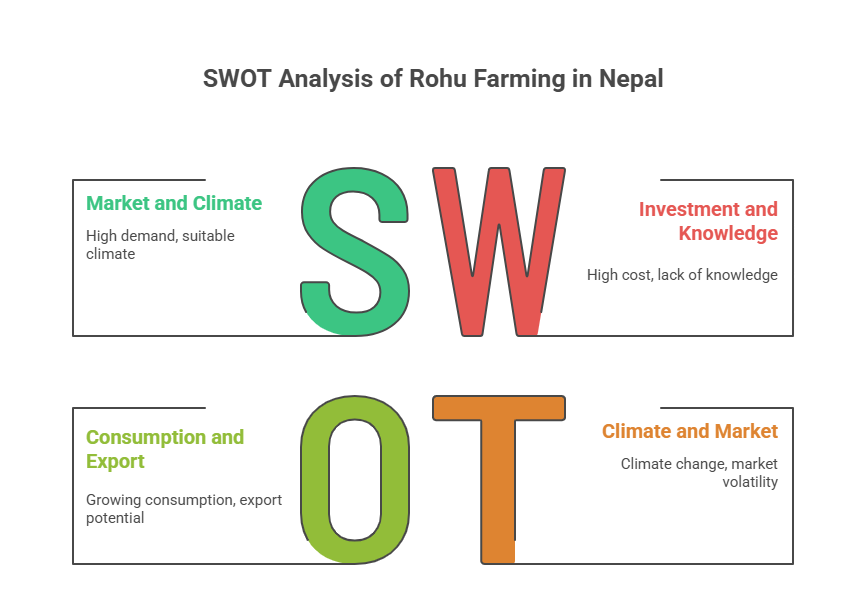
Strengths
- High and consistent market demand.
- Suitable climate and water resources in Terai/Madhesh.
- Government support through subsidies and extension services.
- Integrates well with agriculture (integrated farming).
Weaknesses
- High initial capital investment for pond construction.
- Fluctuating and often high cost of quality feed.
- Dependence on monsoon and groundwater.
- Lack of technical knowledge among new farmers.
- Risk of disease outbreaks and predation.
Opportunities
- Growing domestic consumption of fish protein.
- Potential for export to neighboring countries.
- Value addition (processing, packaging).
- Organic and biofloc-based farming for premium markets.
- Agri-tourism and recreational fishing.
Threats
- Climate change impacts (erratic rainfall, floods, droughts).
- Pollution of water sources from agriculture and industry.
- Outbreak of diseases like EUS.
- Market price volatility and middlemen dominance.
- Theft and security issues in remote areas.
Sources
Augusty, K.T. 1979. Fish Farming in Nepal. Archana Printers & Publishers, Kottayam 29, India.
ICAR. 2006. Handbook of Fisheries and Aquaculture. Indian Council of Agricultural Research (ICAR), New Delhi.
Jha, D.K. 1991. Laboratory Manual of Fish Disease. Tribhuvan University, IAAS, Rampur.
Jhingran, V.G. and R.S.V. Pullin. 1985. A Hatchery Manual for the common, Chinease and Indian Major Carps. Asian Development Bank, ICLARM, Manila, Philippines.
NACA. 1989. Integrated Fish Farming in China Technical Manual 7. A World Food Day Publication of the Network of Aquaculture Centre in Asia and the Pacific, Bangkok Thailand.
Shrestha, M.K. and N.P. Pandit. 2012. A Text Book of Principles of Aquaculture (Second Edition). Aquaculture Department, Institute of Agriculture and Animal Science, Rampur, Chitwan, Nepal.
Shrestha T.K. and D.K. Jha. 1993. Introduction to Fish Culture. Institute of Agriculture and Animal Science, Rampur, Chitwan, Nepal.
Woynarovich, E. and L. Horvath. 1984. The Artificial Propagation of Warm Water Finfishes, A Manual for Extension.